Use the Net Carbs Calculator
Free net carbs calculator that subtracts fiber and sugar alcohols from your total carbs per serving, with the true factor for erythritol, maltitol and IMO.
Start from a common food
Or skip straight to the label fields below. Values are per the serving named on each chip.
1. Copy the numbers off the label
Which label are you reading?US "Total Carbohydrate" already contains the fiber and sugar alcohol grams, so both get subtracted.
Per serving, not per package.
Indented under Total Carbohydrate.
2. Name the sugar alcohols
Naming them matters. Erythritol subtracts in full at GI 0; maltitol only halves at GI 35. A flat 50% rule gets both wrong.
About 90% is absorbed and excreted unchanged in urine. Subtract every gram.
3. Pick your counting rule
How much fiber counts as carbs?The keto and Atkins standard. No fiber gram counts as a carb.
Two-serving packages are the most common counting error.
Most people enter ketosis somewhere between 20 g and 50 g.
Net carbs per serving
Fits comfortably5 g
22 g total carbohydrate minus 9 g fiber and 8 g of sugar alcohol — a 77% reduction.
Where the 22 g goes
Every gram of declared carbohydrate lands in exactly one of these three buckets.
For 1 serving(s)
5 g
25% of 20 g
Carbs you removed
17 g
77% of the label total
Calories from carb sources
40 kcal
2 kcal from sugar alcohols
Servings before you hit 20 g
4
If you ate nothing else
The same label, four counting conventions
This is why two trackers can disagree about the identical food. Your selected rule is highlighted.
| Convention | Net carbs | What it assumes |
|---|---|---|
| Keto / Atkins standardyour rule | 5 g | All fiber out, each polyol at its own factor |
| Flat 50% polyol rule | 9 g | All fiber out, every polyol halved regardless of type |
| ADA half-fiber rule | 9.5 g | Half the fiber out only above 5 g — built for insulin dosing |
| Total carbs (no subtraction) | 22 g | Nothing subtracted. The most conservative count there is |
Sugar alcohol subtraction reference
Glycemic index against glucose at 100 and sucrose at 65. Calorie values are the FDA figures in 21 CFR 101.9. Highlighted rows are the ones you selected.
| Sweetener | Subtract | GI | kcal/g |
|---|---|---|---|
| Erythritol | 100% | 0 | 0.2 |
| Allulose | 100% | 0 | 0.4 |
| Maltitol (crystalline) | 50% | 35 | 2.1 |
| Maltitol syrup | 50% | 52 | 3.0 |
| Xylitol | 50% | 12 | 2.4 |
| Sorbitol | 50% | 9 | 2.6 |
| Mannitol | 50% | 2 | 1.6 |
| Isomalt | 50% | 9 | 2.0 |
| Lactitol | 50% | 6 | 2.0 |
| Glycerin (glycerol) | 50% | 5 | 4.3 |
| Hydrogenated starch hydrolysates | 50% | 39 | 3.0 |
| IMO (isomalto-oligosaccharide) | 0% | 35 | 4.0 |
| Unspecified blend | 50% | — | 2.4 |
Net carbs is not a regulated term. The FDA has never defined it, so no manufacturer is obliged to calculate it the way this tool does — a package claiming “1 g net carb” may be using a rule of its own. Fiber and polyol responses also vary between people. If you dose insulin, count carbohydrate the way your diabetes team taught you and confirm any change with them before you rely on it.
Educational tool, not medical advice. Check this tool’s method and limitations before interpreting a result. Talk to a qualified healthcare professional before making decisions about medication, diet, exercise, or treatment. See our Terms of Use.
Your rating helps improve Net Carbs Calculator. We store only an anonymized vote (no personal data).
How to Use Net Carbs Calculator
Step 1: Choose your label system
Set the toggle to US / Canada or EU / UK / AU. A US "Total Carbohydrate" figure contains the fiber grams, while an EU "Carbohydrate" figure already excludes them, so the calculator subtracts fiber in one case and not the other.
Step 2: Copy the carbohydrate and fiber grams
Enter the per-serving Total carbohydrate and Dietary fiber values exactly as printed. Use the per-serving column, not the per-package one. Quick-add chips for avocado, chia, low-carb tortillas and sugar-free candy fill both fields for you.
Step 3: Name the sugar alcohols
Pick the actual sweetener from the Sugar alcohol dropdown rather than a generic entry. Erythritol and allulose subtract 100%, maltitol and xylitol 50%, IMO 0%. Add a second row for blends such as erythritol plus maltitol.
Step 4: Pick your fiber rule
Choose Subtract all fiber for keto and Atkins, the ADA half-fiber rule if you dose insulin, or Subtract no fiber for the most conservative count.
Step 5: Set servings and your daily limit
Enter how many servings you will actually eat, then pick a daily net carb limit from 20 g strict keto up to 150 g liberal low carb. The progress bar shows what share of that budget this food spends.
Step 6: Compare the four conventions
Read the net carbs headline, then check the comparison table showing the same label scored under the keto standard, a flat 50% polyol rule, the ADA rule, and total carbs with nothing subtracted.
Key Features
- Per-sweetener factors: erythritol 100%, maltitol 50%, IMO 0%
- US and EU label modes — EU carbs already exclude fibre
- ADA half-fiber rule for insulin dosing
- The same label scored under four counting conventions
- Calories from carb sources at FDA sugar alcohol values
- Laxative thresholds at 50 g sorbitol and 20 g mannitol
Understanding Results
Net Carbs Calculator Formula
The calculator normalises both label systems to a US-equivalent total carbohydrate, then applies one equation:
Net carbs = Total carbohydrate − Fiber subtracted − Σ (sugar alcohol grams × its factor)
Total carbohydrate is the US figure as printed, or an EU “carbohydrate” value plus its separately declared fibre. Fiber subtracted is all of the fiber under the keto rule, half of it above 5 g per serving under the ADA rule, or none under the conservative rule. Each sugar alcohol factor reflects that sweetener's glycemic behaviour rather than a flat 50%: erythritol and allulose 1.0, maltitol, xylitol, sorbitol, isomalt, lactitol and glycerin 0.5, and IMO 0. Calories are computed separately at 4 kcal/g for digestible carbohydrate, 2 kcal/g for fiber, and the FDA-specified value for each polyol — 0.2 for erythritol up to 4.3 for glycerin.
Reference Ranges & Interpretation
Net carbs are only meaningful against a daily budget. Strict or therapeutic ketogenic protocols run at 20 g a day, Atkins Induction at 20–25 g, and the standard ketogenic ceiling sits at 50 g, below which most adults reach blood beta-hydroxybutyrate of 0.5–3.0 mmol/L. Moderate low-carb eating lands at 100 g and liberal low-carb at 150 g. A single food is worth flagging once it consumes more than a third of your limit — at 20 g a day, that is any serving above about 7 g of net carbs. Sugar alcohols carry a second, independent ceiling: US labels must warn of a laxative effect at 50 g of sorbitol or 20 g of mannitol per day, and most people notice bloating above 10–15 g of mixed polyols in one sitting.
Assumptions & Limitations
“Net carbs” is not a regulated term. The FDA has never defined it, so a package claiming 1 g net carb may be subtracting every polyol gram in full — this tool does not, and the two answers will differ. The subtraction factors are population averages: individual glycemic responses to maltitol and to fermentable fibre vary widely, and gut microbiome differences change how much energy is recovered from what reaches the colon. The tool also assumes the label itself is accurate, and US regulation permits carbohydrate declarations within 20% of the true value. Anyone dosing insulin should count carbohydrate the way their diabetes team prescribed and confirm any change with them first; a blood glucose meter tested at 30, 60 and 90 minutes settles disputes this formula cannot.
Complete Guide: Net Carbs Calculator

On this page
A net carbs calculator will tell you that a 39 g sugar-free chocolate bar carries about 20 g of carbohydrate, not the 1 g the front of the wrapper implies. The gap is not a labelling scandal. It is arithmetic. That bar is almost entirely maltitol, and maltitol has a glycemic index of 35 against table sugar's 65 — half as glycemic, nowhere near zero. Subtract every gram of it and you have invented 19 grams of headroom your blood glucose will not honour.
That single mistake explains most of the “I'm eating 20 g of carbs and still not in ketosis” posts on low-carb forums. It happens because people treat net carbs as one formula when it is really three competing conventions, applied to two different labelling systems, across a dozen sweeteners that behave nothing alike. Here is what each convention subtracts, which one fits your goal, and why the same nutrition label can honestly produce four different answers.
The Net Carbs Formula, Written Out Properly
Almost every site quotes the same one-line net carbs formula — total carbs minus fiber, minus sugar alcohols:
Net carbs = Total carbohydrate − Dietary fiber − Sugar alcohols
It is close enough to be dangerous. The version that survives contact with a real label looks like this:
Net carbs = Total carbohydrate − Fiber subtracted − Σ (each sugar alcohol × its own factor)
Two changes matter. “Sugar alcohols” is not an ingredient, it is a chemical family whose members range from GI 0 to GI 52, so they cannot share one multiplier. And the fiber term is a decision, not a constant — the number you subtract depends on why you are counting.
Run a real bar through it. A keto bar declaring 22 g total carbohydrate, 9 g fiber and 8 g erythritol gives 22 − 9 − 8 = 5 g net carbs. Swap the erythritol for 8 g of maltitol and nothing on the label changes except one word: 22 − 9 − (8 × 0.5) = 9 g. Same grams, 80% more net carbs. Inside a 20 g daily budget, that word costs you a fifth of the day.
Your European Chocolate Bar Already Subtracted the Fiber
This is the error almost no calculator catches, and it only bites people who buy imported food or travel.
On a US Nutrition Facts panel, “Total Carbohydrate” is calculated by difference and contains everything: starch, sugars, dietary fiber and sugar alcohols. Fiber and sugar alcohols appear indented beneath it precisely because they sit inside that number. Subtracting them is legitimate.
Under Regulation (EU) No 1169/2011, “carbohydrate” is defined as any carbohydrate metabolised by the human body, and it includes polyols — but fibre is defined separately and declared on its own line, outside the carbohydrate figure. The UK, Australia and New Zealand all use the same convention. A British protein bar reading “Carbohydrate 14 g, of which sugars 2 g, Fibre 11 g” has already done your subtraction. Take 14 − 11 = 3 g and you have not calculated net carbs; you have double-subtracted and understated the bar by 11 grams.
The tell is typographic. On a US label, fiber is indented under Total Carbohydrate. On an EU label, fibre sits flush left in its own row, usually below “of which sugars”. Polyols behave identically in both systems — the EU declares them as “of which polyols”, inside the carbohydrate figure — so those get subtracted either way. Switch the label toggle in the calculator above and it handles the asymmetry for you.
Erythritol Subtracts to Zero. Maltitol Doesn't.
The “subtract half the sugar alcohols” shortcut is a population average smeared across ingredients with wildly different metabolic fates. Erythritol is a four-carbon molecule small enough to be absorbed in the small intestine and excreted unchanged in urine — roughly 90% of an oral dose leaves that way. It is barely fermented, its glycemic index is 0, and the FDA assigns it 0.2 kcal/g. Subtract all of it.
Maltitol is a glucose-sorbitol disaccharide that is partly hydrolysed to glucose during digestion. Crystalline maltitol scores GI 35; maltitol syrup, the cheaper form used in most sugar-free chocolate, scores 52. Sucrose is 65. Halving it is generous, not conservative.
| Sweetener | Subtract | GI | kcal/g | Why |
|---|---|---|---|---|
| Erythritol | 100% | 0 | 0.2 | Excreted intact in urine |
| Allulose | 100% | 0 | 0.4 | Rare sugar, not a polyol; excluded from label sugars |
| Xylitol | 50% | 12 | 2.4 | Partly absorbed; toxic to dogs |
| Sorbitol | 50% | 9 | 2.6 | Slowly absorbed, heavily fermented |
| Maltitol | 50% | 35 | 2.1 | Hydrolysed to glucose in part |
| Maltitol syrup | 50% | 52 | 3.0 | Closest of any polyol to table sugar |
| Glycerin | 50% | 5 | 4.3 | Low GI but more calories per gram than sugar |
| IMO | 0% | 35 | 4.0 | Sold as fiber; never approved as one |
That last row deserves its own warning. Isomalto-oligosaccharide appears on bar labels as dietary fiber, but the FDA's 2016 rule requires an isolated carbohydrate to demonstrate a physiological benefit before it can be declared as fiber, and IMO never made the approved list. Roughly 60–70% of it digests to glucose. Count every gram.
One caveat worth carrying about erythritol, the polyol this article just told you to subtract in full: in 2023 a Cleveland Clinic group reported in Nature Medicine that high circulating erythritol tracked with major adverse cardiovascular events and enhanced platelet reactivity. That is an association in observational cohorts, not proven causation, and the field is still arguing about it. But “zero net carbs” and “zero consequences” are different claims.
Should You Subtract All the Fiber? The ADA Says No
Keto and Atkins subtract every gram of fiber. The American Diabetes Association's carb-counting guidance does something deliberately narrower: subtract half the fiber grams, and only when a serving contains more than 5 g. Below 5 g, subtract nothing at all.
The difference is not a disagreement about fiber chemistry. It is a difference in what the number is for. Keto counting keeps a whole day under a ketosis threshold, where a few grams of fermentable fibre either way will not decide the outcome. ADA counting feeds an insulin dose, and a systematic 8 g overestimate of what you subtracted is a hypoglycaemia risk at three in the morning. If you are matching rapid-acting insulin to a meal, use total carbohydrate or the ADA rule — our insulin-to-carb ratio calculator is built on total carbohydrate for exactly this reason.
Fibre type nudges the answer too. Viscous soluble fibres such as beta-glucan in oats and psyllium husk slow gastric emptying and flatten the glucose curve of everything eaten alongside them. Insoluble fibre — cellulose, wheat bran — is metabolically inert and simply passes through. Neither contributes glucose, but only one of them actively blunts the rest of the meal, which is why a 30 g slice of dense rye behaves differently from 30 g of white bread with bran sprinkled on top.
What none of these rules tell you is how much fibre you should be eating in the first place — which matters more on keto than anywhere else, because the grams you subtract are the same grams you need. Strip out bread, fruit and legumes and a low-carb day routinely lands under 15 g. The fiber intake calculator sets your daily target from calories at 14 g per 1,000 kcal, which works out to 28 g on a 2,000 kcal keto day.
One Candy Bar, Four Answers
Take the sugar-free chocolate from the opening paragraph. A 40 g serving declares 39 g total carbohydrate, 0 g dietary fiber, and 38 g sugar alcohols listed in the ingredients as maltitol. Here is what four honest conventions produce from that identical label:
| Convention | Math | Net carbs |
|---|---|---|
| Front-of-pack claim | 39 − 38 | 1 g |
| Keto standard, per-polyol factor | 39 − (38 × 0.5) | 20 g |
| ADA rule (no fiber to subtract) | 39 − 0 − 19 | 20 g |
| Total carbs, nothing subtracted | 39 | 39 g |
A twentyfold spread between the wrapper and the defensible number. And notice what none of the four conventions touches: 38 g of maltitol at the FDA's 2.1 kcal/g is 80 calories that exist regardless of how you count carbs. Sugar-free is not calorie-free, and a bar marketed at “1 g net carb” can still stall fat loss on calories alone.
One label is only ever half the picture. To set the daily budget this number gets spent against, run your stats through the keto macro calculator or, for a non-ketogenic target, the daily carb calculator.
Which Rule Should You Use?
There is no universally correct convention, only a correct one for your goal. Pick a row and stay in it — switching rules mid-week is what makes food logs untrackable.
| If you are… | Use | Because |
|---|---|---|
| On keto for weight loss | All fiber out, per-polyol factors | Whole-food fiber is genuinely non-glycemic; the daily total is what matters |
| Dosing rapid-acting insulin | Total carbs, or the ADA half-fiber rule | Under-dosing from over-subtraction causes post-meal highs; over-dosing causes 3 a.m. lows |
| Stalled on keto despite “20 g” | Total carbs for two weeks | Removes every assumption at once and shows whether the subtractions were the problem |
| Eating mostly whole foods | All fiber out; polyols rarely apply | Avocado, chia and leafy greens have no added polyols to argue about |
| Eating packaged “keto” products | Per-polyol factors, and verify with a glucose meter | Maltitol, glycerin and IMO are where the label and your bloodstream disagree most |
The meter is the tiebreaker. Test fasting, eat the questionable product alone, then test at 30, 60 and 90 minutes. A rise under about 15 mg/dL suggests the subtraction was roughly fair. A 40 mg/dL spike from something claiming 1 g net carb tells you more than any formula on this page.
The Gram Ceilings That End a Keto Day
Two separate ceilings govern how many net carbs you can spend, and people usually only track the first.
The metabolic ceiling is the familiar one. Most adults reach nutritional ketosis — blood beta-hydroxybutyrate of 0.5–3.0 mmol/L — somewhere under 50 g of net carbs a day, and people who are insulin resistant or lightly active often need 20–30 g. The Atkins Induction phase sets 20–25 g, which is where the 20 g figure in most keto content originally came from. Glycemic quality still matters inside that budget: 20 g arriving as one sweetened drink behaves differently from 20 g spread across vegetables, which is what a glycemic load calculator captures and a plain gram count does not.
The gastrointestinal ceiling arrives sooner than most people expect, and it is written into US law. Under 21 CFR 101.9(j)(4), a food whose reasonable daily consumption could deliver 50 g of sorbitol or 20 g of mannitol must carry the statement “excess consumption may have a laxative effect”. Those are the regulatory limits, not the comfort limits: bloating and gas commonly start above 10–15 g of mixed polyols in a single sitting. Erythritol is the best tolerated of the family, sorbitol and mannitol the worst, and polyols are FODMAPs, so anyone managing IBS should treat that 10 g figure as generous.
Which means the honest ceiling on a two-serving bag of sugar-free candy is not the 40 g of net carbs it costs you. It is the 76 g of maltitol, the 160 calories that came with it, and the afternoon you will spend regretting both.
References
- U.S. Food and Drug Administration. Questions and Answers on Dietary Fiber — which isolated carbohydrates may be declared as dietary fiber.
- U.S. Code of Federal Regulations. 21 CFR 101.9 — Nutrition labeling of food — sugar alcohol caloric values and laxative-effect labelling thresholds.
- American Diabetes Association. Carb Counting and Diabetes — the more-than-5 g half-fiber rule for insulin dosing.
- European Union. Regulation (EU) No 1169/2011 on the provision of food information to consumers — the carbohydrate and fibre definitions that exclude fibre from the carbohydrate figure.

Written by Jurica Šinko
Founder & CEO
Entrepreneur and health information advocate, passionate about making health calculations accessible to everyone through intuitive digital tools.
View full profileFrequently Asked Questions
How do you calculate net carbs?
Subtract dietary fiber and the non-glycemic share of each sugar alcohol from total carbohydrate: net carbs = total carbohydrate minus fiber minus (each sugar alcohol multiplied by its own factor). A keto bar with 22 g total carbohydrate, 9 g fiber and 8 g erythritol gives 22 − 9 − 8 = 5 g. Swap that erythritol for maltitol and only half comes off, producing 9 g from an otherwise identical label.
Do you subtract all sugar alcohols from net carbs?
No, the amount you subtract depends on which sugar alcohol it is. Erythritol and allulose subtract in full because their glycemic index is 0 and the FDA rates them at 0.2 and 0.4 kcal per gram. Maltitol, xylitol, sorbitol, isomalt and glycerin subtract at 50% because they are partly digested. Isomalto-oligosaccharide (IMO) subtracts at 0% and should be counted in full.
Does erythritol count as a net carb?
No. Roughly 90% of ingested erythritol is absorbed in the small intestine and excreted unchanged in urine, giving it a glycemic index of 0 and an FDA caloric value of 0.2 kcal per gram, so every gram subtracts. The one caveat is a 2023 Nature Medicine study that linked high circulating erythritol to major adverse cardiovascular events, which is an association in observational data rather than a carb-counting problem.
Is maltitol bad for keto?
Maltitol is the polyol most likely to break a keto day. Crystalline maltitol carries a glycemic index of 35 and maltitol syrup 52, against table sugar at 65, so at most half of it subtracts. A 40 g sugar-free chocolate bar containing 38 g of maltitol works out to about 20 g of net carbs, an entire day at a 20 g limit, plus 80 calories that no net-carb claim on the wrapper mentions.
How many net carbs a day to stay in ketosis?
Most adults reach nutritional ketosis, meaning blood beta-hydroxybutyrate between 0.5 and 3.0 mmol/L, below 50 g of net carbs a day. People who are insulin resistant or largely sedentary often need 20 to 30 g, and the Atkins Induction phase sets 20 to 25 g. Start at 20 g, confirm with ketone strips or a blood meter, then raise in 5 g steps until ketosis stops.
Do you subtract fiber from carbs on UK and EU labels?
No. Under Regulation (EU) No 1169/2011 the carbohydrate figure already excludes fibre, which is declared on its own separate line. A bar reading "Carbohydrate 14 g, Fibre 11 g" has 14 g of net carbs before polyols, not 3 g, and subtracting the fibre understates it by 11 g. Polyols are still inside the EU carbohydrate figure, so those do get subtracted.
What is the difference between total carbs and net carbs?
Total carbohydrate is every gram declared on the label, fiber and sugar alcohols included. Net carbs removes the grams your body cannot convert to glucose. The gap can exceed 10 g in a single serving: an ounce of chia seeds is 12.3 g total carbohydrate but only about 2.5 g net. Total carbs is the more conservative count and the one to switch to if a keto stall will not resolve.
Can I subtract fiber from carbs if I have diabetes?
The American Diabetes Association advises subtracting only half the fiber grams, and only when a serving contains more than 5 g of fiber. Below 5 g, subtract nothing. The narrower rule exists because insulin dosing punishes over-subtraction in both directions: wrongly removing 8 g can drive a post-meal high, while over-dosing on an inflated carb count can cause an overnight low. Confirm the method with your diabetes team before changing how you dose.
Related Calculators

BMR Calculator: Basal Metabolic Rate by Proven Formulas
Use our BMR calculator to estimate your basal metabolic rate using Mifflin–St Jeor or revised Harris–Benedict formulas. Choose metric or US units and see TDEE.
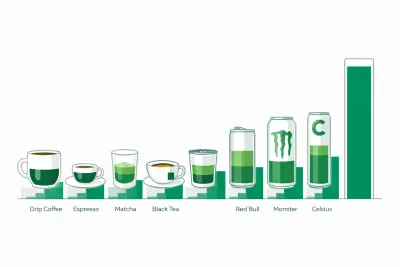
Caffeine Content Calculator — Coffee, Energy Drinks & Tea
Free caffeine content calculator showing how much caffeine is in coffee, espresso, tea, Red Bull, Monster and Celsius, plus your safe daily limit by weight.

Caffeine Half-Life Calculator: How Long Caffeine Lasts
Free caffeine half-life calculator showing how much caffeine is left at bedtime, your personal clearance rate, and the latest safe cutoff time to drink.

Calorie Calculator: Daily TDEE and Intake Estimate
Use our calorie calculator to estimate daily energy needs (TDEE) from age, sex, height, weight, and activity. See maintain, loss, and gain targets instantly.

Calorie Deficit Calculator — Set a Safe Daily Deficit
Use our calorie deficit calculator to set a safe daily calorie target. Estimate TDEE, choose a weekly weight-loss rate, and see deficit, timeline, and guidance.

Calorie Density Calculator: Calories per Gram of Food
Free calorie density calculator that turns calories and grams into kcal per gram, sorts any food into four energy density bands, and compares two foods.