Use the TSH Levels Calculator
Free TSH levels calculator classifying your thyroid result as normal, subclinical or overt hypothyroid and hyperthyroid, with age and pregnancy adjusted ranges.
TSH vs Adult range
6.2 mIU/L
mIU/L, µIU/mL and mU/L are the same number — no conversion needed.
The standard laboratory interval. About 95% of disease-free adults under 60 fall inside it.
Reference interval 0.80–1.80 ng/dL. Use free T4, not total T4.
Your TSH against the Adult interval
6.2 mIU/L
Reference 0.4–4 mIU/L · 1.55× the upper limit
Logarithmic scale, 0.01–100 mIU/L. Green band = 0.4–4 reference interval. Red line = the 10 mIU/L threshold above which treatment is recommended regardless of symptoms.
Classification
Subclinical hypothyroidism
TSH above the interval with a normal free T4. The pituitary is compensating and succeeding — thyroid hormone output is still normal.
Where you land on the TSH × free T4 grid
| TSH ↓ / FT4 → | Low FT4 | Normal FT4 | High FT4 |
|---|---|---|---|
| High TSH | Overt hypothyroid | Subclinical hypothyroid | Discordant |
| Normal TSH | Central hypothyroid | Euthyroid | Discordant |
| Low TSH | Central hypothyroid | Subclinical hyperthyroid | Overt hyperthyroid |
Highlighted cell is your position. TSH alone picks a row; free T4 picks the column.
Reference upper limit
4
mIU/L, Adult
Multiple of upper limit
1.55×
above range
Free T4
1.10
normal (ng/dL)
The same TSH of 6.2 across every population
| Population | Interval | Verdict on your value |
|---|---|---|
| Adult | 0.4–4 | Above range |
| 60–69 | 0.4–4.6 | Above range |
| 70–79 | 0.4–5.9 | Above range |
| 80+ | 0.4–7.5 | In range |
| 1st tri | 0.1–2.5 | Above range |
| 2nd tri | 0.2–3 | Above range |
| 3rd tri | 0.3–3.5 | Above range |
This row-by-row read is the whole argument for age-specific ranges: a single number can be flagged abnormal in one population and be unremarkable in another.
Educational tool, not a diagnosis. A single abnormal TSH is not thyroid disease — the standard next step is a repeat test in 6–12 weeks, because roughly 60% of mildly raised TSH values normalise on their own. Reference intervals also vary between assays, so use your own laboratory's printed range when it differs from the values here.
Educational tool, not medical advice. Check this tool’s method and limitations before interpreting a result. Talk to a qualified healthcare professional before making decisions about medication, diet, exercise, or treatment. See our Terms of Use.
Your rating helps improve TSH Levels Calculator. We store only an anonymized vote (no personal data).
How to Use TSH Levels Calculator
Step 1: Enter your TSH value
Type the TSH figure from your lab report into the TSH field. The units mIU/L, µIU/mL and mU/L are numerically identical, so no conversion is needed.
Step 2: Pick your age band or trimester
Select your population from the dropdown. The reference interval shifts from 0.4–4.0 mIU/L for adults under 60 up to 0.4–7.5 at age 80 and over, and down to 0.1–2.5 in the first trimester of pregnancy.
Step 3: Add free T4 if you have it
Tick the free T4 box and enter the value in ng/dL or pmol/L. Free T4 is what separates subclinical from overt disease — without it the classification stays provisional.
Step 4: Read the band chart and grid
The logarithmic chart shows where your TSH sits inside the green reference band and against the red 10 mIU/L treatment line. The TSH × free T4 grid highlights the single cell your two results land in.
Step 5: Compare across populations
Scan the final table to see how the same TSH value is judged in every age band and trimester, then copy the summary to take to your appointment.
Key Features
- Age-banded TSH reference intervals from 0.4–4.0 up to 0.4–7.5 mIU/L at age 80+
- Trimester-specific pregnancy intervals (0.1–2.5, 0.2–3.0, 0.3–3.5 mIU/L)
- Optional free T4 entry that separates subclinical from overt disease
- TSH × free T4 diagnosis grid highlighting your exact position
- Logarithmic TSH band chart marking the 10 mIU/L treatment threshold
- Side-by-side verdict on your value across all seven populations
Understanding Results
Formula
There is no arithmetic formula for TSH — the calculator applies a two-axis classification rule instead. Your TSH is compared against the reference interval for the population you selected, which places you in a high, normal or low row. Free T4 is compared against 0.8–1.8 ng/dL (10.3–23.2 pmol/L), placing you in a low, normal or high column. The intersection names the condition: high TSH with normal free T4 is subclinical hypothyroidism, high TSH with low free T4 is overt hypothyroidism, low TSH with high free T4 is overt hyperthyroidism, and low free T4 without a compensating TSH rise points at the pituitary rather than the thyroid. The underlying physiology is log-linear: each 1 SD fall in free T4 multiplies TSH by roughly ten, which is why TSH detects thyroid change long before thyroid hormone itself leaves the normal range.
Reference Ranges & Interpretation
The standard adult interval is 0.4–4.0 mIU/L. NHANES III percentile data show the upper limit rising with age — approximately 4.6 at 60–69, 5.9 at 70–79 and 7.5 from 80 — while the American Thyroid Association's 2017 pregnancy guidance sets trimester-specific intervals of 0.1–2.5, 0.2–3.0 and 0.3–3.5 mIU/L. Two thresholds carry disproportionate weight: a TSH at or above 10 mIU/L is where guidelines agree levothyroxine is indicated regardless of symptoms, and a TSH below 0.1 mIU/L counts as fully suppressed rather than merely low, carrying an excess risk of atrial fibrillation and bone loss even with a normal free T4.
Assumptions & Limitations
The intervals assume an adult with an intact pituitary who is not acutely unwell. They do not apply to children, to inpatients (non-thyroidal illness depresses TSH and then overshoots it during recovery), or to anyone within 72 hours of a high-dose biotin supplement, which can invert both results at once. TSH assays are not fully harmonised, so the same serum can differ 10–20% between laboratories — always defer to your own lab's printed interval where it differs, and compare serial results only within one lab. A single abnormal TSH is not a diagnosis: roughly 60% of mildly raised values normalise without treatment, so a repeat test at 6–12 weeks with free T4 and TPO antibodies is the standard next step rather than immediate medication. Discuss any abnormal result with a clinician.
Complete Guide: TSH Levels Calculator
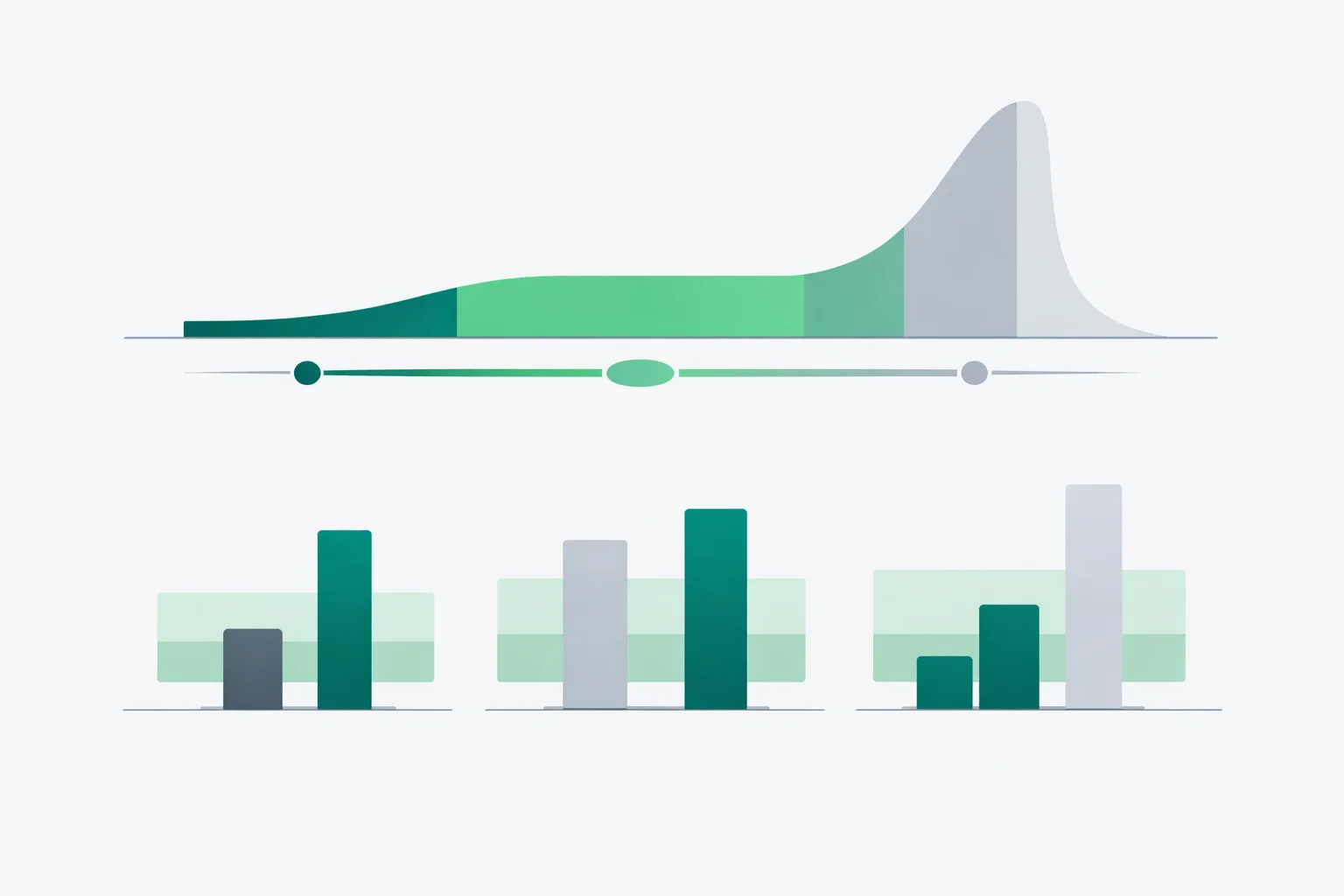
On this page
- Why a small T4 drop doubles your TSH
- Normal TSH levels by age: the table your lab does not print
- One TSH of 4.5, six different verdicts
- Subclinical vs overt: free T4 decides, not TSH
- Pregnancy inverts the rule
- What a high TSH actually means
- Six reasons a TSH result lies
- What to do with the number in front of you
- References
Reading TSH levels correctly starts with one fact that almost nobody is told at the point of the blood draw: the relationship between TSH and thyroid hormone is log-linear, not proportional. Halve the free T4 your thyroid puts out and TSH does not double — it rises roughly a hundredfold. That single piece of mathematics explains why a TSH of 6.2 mIU/L, which looks like a 55% overshoot of a 4.0 upper limit, actually corresponds to a free T4 that has barely moved and is still comfortably normal. It also explains why TSH is the most sensitive thyroid test ever devised and, at the same time, the most over-interpreted number on a routine blood panel. This guide compares the interval your lab printed against the age-specific and pregnancy-specific intervals that endocrinologists actually use, then shows what changes when free T4 enters the picture.
Why a small T4 drop doubles your TSH
The pituitary does not report thyroid hormone linearly. Across the physiological range, the response is approximately:
log(TSH) ∝ −(free T4)
In practice, every 1 SD fall in free T4 multiplies TSH by roughly 10. Work a case through. A free T4 of 1.30 ng/dL sitting with a TSH of 1.4 mIU/L is the middle of the distribution. Drop free T4 by about 0.2 ng/dL — a change of 15%, still well inside the 0.8–1.8 ng/dL reference interval — and TSH climbs past 4.0. Drop it another 0.2 ng/dL, to 0.90 ng/dL, and TSH lands near 12. The thyroid hormone level has fallen by 31% in total; the TSH has risen by 750%. The amplification is the point: it is a designed early-warning system, and it fires long before the hormone actually running your metabolism has left the normal range.
Two consequences follow directly, and both are counter-intuitive. First, a mildly raised TSH is evidence of a responding pituitary, not of a failing metabolism — which is why so many people with a TSH of 5 or 6 feel entirely well. Second, TSH is a terrible measure of severity once treatment starts, because a levothyroxine dose change of 25 mcg can move TSH by several whole units while free T4 shifts by a rounding error. That is why guidelines adjust in 12.5 to 25 mcg steps and wait at least four weeks between them, a rule the levothyroxine dosage calculator applies to a current dose and TSH result. If you are tracking a broader metabolic picture alongside your thyroid results, the BMR calculator gives the resting energy figure that thyroid hormone is ultimately regulating.
Normal TSH levels by age: the table your lab does not print
Nearly every laboratory in the world prints a single interval — usually 0.4–4.0 or 0.45–4.5 mIU/L — and applies it to a 22-year-old and an 84-year-old identically. The NHANES III reference cohort, which screened more than 13,000 disease-free Americans, showed that this is wrong. The 97.5th percentile of TSH climbs steadily with age, by roughly 0.3 mIU/L per decade past 60:
| Population | TSH interval (mIU/L) | What changes |
|---|---|---|
| Adult under 60 | 0.4 – 4.0 | The standard laboratory interval |
| Age 60–69 | 0.4 – 4.6 | Upper limit begins its drift |
| Age 70–79 | 0.4 – 5.9 | A flagged 5.5 is in fact normal here |
| Age 80 and over | 0.4 – 7.5 | Higher TSH tracks with longer survival |
| Pregnancy, 1st trimester | 0.1 – 2.5 | hCG suppresses TSH; both limits fall |
| Pregnancy, 2nd trimester | 0.2 – 3.0 | hCG effect fading |
| Pregnancy, 3rd trimester | 0.3 – 3.5 | Approaching the non-pregnant interval |
The oldest band contains the most surprising finding in thyroid epidemiology. In the Leiden 85-plus study, participants in the highest TSH quartile had lower all-cause mortality than those in the lowest, and the association held after adjusting for comorbidity. A mildly underactive thyroid at 88 appears to be an adaptation, not a disease. Applying a 20-year-old's upper limit of 4.0 to that population manufactures a diagnosis and then treats it.
One TSH of 4.5, six different verdicts
Take a single result — TSH 4.5 mIU/L — and run it through each population. Nothing about the blood sample changes. Only the interval does:
| Who is being tested | Verdict on 4.5 | Likely action |
|---|---|---|
| 35-year-old, not pregnant | Above range | Repeat in 6–12 weeks with TPO antibodies |
| 65-year-old | In range | No action |
| 74-year-old | Comfortably in range | No action |
| 83-year-old | Mid-interval | No action; treating may cause harm |
| Pregnant, 9 weeks | Nearly double the upper limit | Urgent — levothyroxine usually started |
| Pregnant, 30 weeks | Above range | Treat and recheck in 4 weeks |
The spread runs from "ignore it entirely" to "start medication this week" on the same number. That is the entire case for entering your age band or trimester into the calculator above rather than comparing your result to the interval on the printout.
Subclinical vs overt: free T4 decides, not TSH
Here is the distinction that TSH alone cannot make. Subclinical and overt hypothyroidism can present with identical TSH values — the difference lives entirely in free T4:
- Subclinical hypothyroidism: TSH above the interval, free T4 inside 0.8–1.8 ng/dL. Prevalence is about 4–10% of adults and rises past 15% in women over 60. Roughly 2–5% per year progress to overt disease; positive TPO antibodies roughly quadruple that rate.
- Overt hypothyroidism: TSH above the interval and free T4 below 0.8 ng/dL. Prevalence is about 0.3%. Compensation has failed, and treatment is not controversial.
- Subclinical hyperthyroidism: TSH below the interval, free T4 normal. The commonest single cause is not thyroid disease at all — it is over-replacement in people already taking levothyroxine.
- Overt hyperthyroidism: TSH suppressed below 0.1, free T4 above 1.8 ng/dL. Graves disease accounts for roughly 70% of cases.
The 10 mIU/L line is where the guidelines stop disagreeing. Below it, the American Thyroid Association and the European Thyroid Association both leave treatment of subclinical hypothyroidism to clinical judgement, weighing symptoms, antibody status and age. At or above 10 mIU/L, both recommend levothyroxine regardless of symptoms — because progression to overt disease is high and the cardiovascular risk signal becomes consistent. The TRUST trial is the reason for that caution below 10: 737 adults over 65 with subclinical hypothyroidism were randomised to levothyroxine or placebo, TSH normalised in the treatment arm, and neither the tiredness score nor the thyroid symptom score improved at all.
Pregnancy inverts the rule
Every other adjustment in this article pushes the upper limit up. Pregnancy pushes it down, and hard. Human chorionic gonadotropin shares a common alpha subunit with TSH and weakly stimulates the same receptor; hCG peaks around weeks 8–11, drives extra thyroid hormone output, and the pituitary responds by cutting TSH. The result is a first-trimester interval of roughly 0.1–2.5 mIU/L. A TSH of 0.15 at 10 weeks is physiological. The same 0.15 outside pregnancy would prompt a hyperthyroidism workup.
The upper limit matters more than the lower one. Maternal thyroid hormone is the fetus's only source until the fetal thyroid begins functioning around week 12, and observational data link maternal TSH above the trimester-specific limit to lower offspring IQ and higher miscarriage rates. Levothyroxine requirements also rise by 30–50% in women already treated before conception, which is why the standard advice is to increase the dose as soon as pregnancy is confirmed rather than waiting for the first antenatal blood test. Tracking your stage of pregnancy alongside these thresholds is straightforward with the pregnancy week calculator.
What a high TSH actually means
A high TSH means the pituitary is pushing the thyroid harder than usual. It does not, on its own, mean thyroid hormone is low — that is precisely the difference between the subclinical and overt categories above. Working backward from a raised TSH, the causes in rough order of frequency are: Hashimoto thyroiditis (autoimmune, the dominant cause in iodine-sufficient countries, and detectable through TPO antibodies in about 90% of cases); under-replacement in someone already on levothyroxine; recovery from a non-thyroidal illness; a recent viral or postpartum thyroiditis passing through its hypothyroid phase; iodine deficiency or excess; and medications — amiodarone, lithium, and the checkpoint inhibitors used in oncology.
The magnitude carries information the category does not. A TSH of 4.8 in an untreated adult has roughly a 60% chance of returning to normal on a repeat test without any intervention. A TSH of 25 does not spontaneously normalise, and a TSH above 100 in an adult almost always means established autoimmune failure or an omitted levothyroxine dose. When thyroid dysfunction affects the lipid panel — overt hypothyroidism typically raises LDL by 10–30% and treatment reverses it — the cholesterol calculator puts that shift into a risk context.
Six reasons a TSH result lies
Before accepting an abnormal TSH, rule these out. Each produces a genuinely wrong number on a technically correct assay:
- Biotin supplements. High-dose biotin — the 5,000–10,000 mcg found in hair and nail products — interferes with streptavidin-biotin immunoassays and can produce a falsely low TSH with a falsely high free T4, mimicking Graves disease convincingly enough to have triggered unnecessary treatment. Stop biotin 48–72 hours before testing.
- Time of day. TSH follows a circadian rhythm with a nocturnal peak, and an afternoon sample can read 30–50% lower than a morning one from the same person. A borderline result should be rechecked at a consistent time.
- Non-thyroidal illness. During acute illness TSH falls, then overshoots upward during recovery. Thyroid testing in a hospitalised patient is unreliable unless the clinical suspicion is high.
- Recent levothyroxine timing. Taking the tablet before the blood draw spikes free T4 for a few hours without changing TSH, producing a discordant pattern that looks like assay interference.
- Heterophile antibodies. Present in about 0.5% of people, these bridge the assay antibodies and generate a falsely elevated TSH — the classic clue is a raised TSH with entirely normal free T4 and no symptoms that fails to budge over years.
- Assay differences between labs. TSH methods are not perfectly harmonised; the same serum can differ by 10–20% between platforms. Compare serial results only when they were run by the same laboratory.
What to do with the number in front of you
If your TSH is between the upper limit for your age band and 10 mIU/L with normal free T4, the evidence-based next step is a repeat TSH with free T4 and TPO antibodies in 6–12 weeks — not immediate treatment. Positive TPO antibodies change the calculus, because they identify the subgroup that genuinely progresses. If your TSH is at or above 10, book the appointment; that is the one threshold where the guidelines converge on treating. If your TSH is below 0.4, ask specifically whether it is merely low (0.1–0.4) or fully suppressed (under 0.1), because the suppressed group carries a threefold increase in atrial fibrillation risk in adults over 60 and warrants investigation of the cause rather than reassurance.
And if your TSH is normal but you feel unwell, the honest answer is that the thyroid has been ruled out with unusual confidence. TSH is sensitive enough that a normal value in an untreated person with an intact pituitary excludes clinically meaningful thyroid dysfunction. Fatigue, weight change and cold intolerance are real symptoms with a long list of causes; a normal TSH is a signal to keep looking, not a dead end. Cross-checking the metabolic picture with the metabolic rate calculator or a blood count review through the hemoglobin calculator often turns up the more likely explanation.
References
- Surks MI, Hollowell JG. Age-specific distribution of serum thyrotropin and antithyroid antibodies in the US population. J Clin Endocrinol Metab, 2007.
- Alexander EK et al. 2017 Guidelines of the American Thyroid Association for the Diagnosis and Management of Thyroid Disease During Pregnancy and the Postpartum. American Thyroid Association.
- Stott DJ et al. Thyroid Hormone Therapy for Older Adults with Subclinical Hypothyroidism (TRUST trial). N Engl J Med, 2017.
- Hypothyroidism — overview and diagnostic testing. National Institute of Diabetes and Digestive and Kidney Diseases (NIDDK).

Written by Jurica Šinko
Founder & CEO
Entrepreneur and health information advocate, passionate about making health calculations accessible to everyone through intuitive digital tools.
View full profileFrequently Asked Questions
What is a normal TSH range?
For a non-pregnant adult under 60, the standard laboratory interval is 0.4 to 4.0 mIU/L. That interval is not universal: the 97.5th percentile climbs with age to roughly 4.6 at 60-69, 5.9 at 70-79 and 7.5 at 80 and over, while pregnancy pushes it down to 0.1-2.5 mIU/L in the first trimester. Use the interval for your own age band rather than the single range printed on the report.
Is a TSH of 4.5 too high?
It depends entirely on who you are. At 35 and not pregnant, 4.5 sits just above the 4.0 upper limit and warrants a repeat test with free T4 and TPO antibodies in 6 to 12 weeks. At 74 it is comfortably inside the age-specific interval of 0.4-5.9 and needs no action at all. At 9 weeks pregnant the same 4.5 is nearly double the 2.5 upper limit and usually prompts levothyroxine.
What TSH level requires medication?
A TSH at or above 10 mIU/L is the one threshold where the American and European Thyroid Association guidelines converge: levothyroxine is recommended even when free T4 is normal and there are no symptoms. Between the age-specific upper limit and 10, treatment is a judgement call weighing TPO antibody status, symptoms and age. The TRUST trial randomised 737 adults over 65 in that band and found no symptom benefit from treatment.
What is the difference between subclinical and overt hypothyroidism?
Free T4 is the only thing that separates them. Subclinical means TSH is above the interval while free T4 is still inside 0.8-1.8 ng/dL, and affects 4-10% of adults. Overt means TSH is high and free T4 has fallen below 0.8 ng/dL, and affects about 0.3%. Roughly 2-5% of subclinical cases progress to overt disease each year, and positive TPO antibodies roughly quadruple that rate.
Can a high TSH be normal?
Yes, in two situations. Above age 70 a TSH of 5 or 6 sits inside the age-specific reference interval even though most lab reports still flag it, and in the Leiden 85-plus study the highest TSH quartile had lower all-cause mortality than the lowest. Separately, about 60% of mildly raised TSH values in untreated adults return to normal on a repeat test with no intervention at all.
Why is my TSH low but my T4 normal?
That pattern is subclinical hyperthyroidism. The commonest cause is not thyroid disease but over-replacement in someone already taking levothyroxine; toxic nodules and early Graves disease account for most of the rest. The distinction that matters is merely low (0.1-0.4 mIU/L) versus fully suppressed (under 0.1), because suppression carries roughly a threefold increase in atrial fibrillation risk in adults over 60.
Do biotin supplements affect TSH test results?
Yes, and dramatically. High-dose biotin of 5,000 to 10,000 mcg, typical of hair and nail supplements, interferes with streptavidin-biotin immunoassays and produces a falsely low TSH alongside a falsely high free T4 — a pattern that mimics Graves disease closely enough to have triggered unnecessary treatment. Stop biotin 48 to 72 hours before any thyroid blood draw.
Does time of day change a TSH result?
TSH follows a circadian rhythm with a nocturnal peak, and an afternoon sample can read 30-50% lower than a morning sample from the same person on the same day. For a borderline value near the upper limit, that swing alone can move the result across the cut-off, so repeat tests should be drawn at a consistent time and ideally at the same laboratory, since TSH assays differ by 10-20% between platforms.
Related Calculators
A1C Calculator — Convert HbA1c to eAG with Targets
Use our A1C calculator to convert HbA1c to estimated average glucose (eAG). See normal, prediabetes, and diabetes thresholds in mg/dL and mmol/L. Fast results.
Albumin Calculator — Serum Albumin Level Interpretation
Free albumin calculator to interpret serum albumin levels, grade hypoalbuminemia, and compute A/G ratio plus albumin-corrected calcium from your lab results.
Albumin-Corrected Anion Gap Calculator — Hidden Acidosis
Use our albumin-corrected anion gap calculator to raise the anion gap by 2.5 per 1 g/dL of low albumin and reveal a hidden high-gap metabolic acidosis.

ANC Calculator: Absolute Neutrophil Count & Neutropenia
Free ANC calculator to calculate absolute neutrophil count from WBC and differential. Get ANC in cells/uL and x10^9/L with instant neutropenia grading.
Anion Gap Calculator — Metabolic Acidosis Evaluation
Free anion gap calculator finds serum anion gap from sodium, chloride, and bicarbonate, with albumin correction and delta ratio for metabolic acidosis.
AST/ALT Ratio Calculator — Free De Ritis Ratio Tool
Use our free AST/ALT ratio calculator to compute the De Ritis index instantly. Visual ratio chart, enzyme-level assessment, and clinical patterns guide.