Use the Levothyroxine Dosage Calculator
This levothyroxine dosage calculator applies the FDA label’s weight-based rule, 1.6 mcg per kilogram per day, and then shows the three situations where guidelines deliberately depart from it: older or cardiac patients who start low, mild hypothyroidism that needs less, and pregnancy that needs more. A fourth tab covers children, whose per-kilogram doses are several times higher. Every figure is rounded to the tablet strengths that actually exist.
Enter a body weight to see the label’s 1.6 mcg/kg full replacement estimate rounded to a marketed tablet. Height adds a BMI-adjusted estimate and ideal body weight; age, heart disease and TSH decide whether the first dose should be lower than the estimate.
Actual current weight, 30 to 300 kg (66 to 661 lb). Switching units converts the number you typed.
Adds BMI and the BMI-adjusted estimate.
Only used for the Devine ideal body weight; select again to clear.
Adults only; from 65 the starting plan changes.
Under 10 the label uses a lower per-kilogram figure. Interpret the number itself with the TSH levels calculator.
Starting-dose estimate
Enter a weight to see the 1.6 mcg/kg estimate, the nearest tablet strength, and whether age, heart disease, severity or a TSH under 10 mIU/L calls for a lower first dose.
These are guideline and label arithmetic for discussion with a prescriber, not a prescription. Levothyroxine has a narrow therapeutic index; never start, stop or change a dose on the basis of this page. The calculator does not cover TSH suppression for thyroid cancer, central (pituitary) hypothyroidism where TSH cannot guide dosing, myxedema coma, or liquid and softgel products, and levothyroxine must not be used for weight loss. Entries stay in your browser and are not sent anywhere. Related tools: the ideal body weight calculator and the geriatric dose calculator.
Educational tool, not medical advice. Check this tool’s method and limitations before interpreting a result. Talk to a qualified healthcare professional before making decisions about medication, diet, exercise, or treatment. See our Terms of Use.
Your rating helps improve Levothyroxine Dosage Calculator. We store only an anonymized vote (no personal data).
How to Use Levothyroxine Dosage Calculator
Step 1: Pick the dosing question
Choose Adult starting dose for a new prescription, Adjust a dose from TSH for someone already on levothyroxine, Pregnancy for the confirmation-of-pregnancy increase, or Child for the label’s age-based mcg/kg bands.
Step 2: Enter weight, and height if you have it
Weight in kg or lb drives the 1.6 mcg/kg full replacement estimate. Height adds BMI, the BMI-adjusted estimate and, with sex selected, the Devine ideal body weight, so you can see how far body composition moves the number.
Step 3: Add age, TSH and the situations that change the first dose
Age 65 or over, known heart disease and severe long-standing hypothyroidism switch the starting plan to the label’s low-and-slow approach. A pre-treatment TSH under 10 mIU/L switches the per-kilogram figure to 1.0 mcg/kg.
Step 4: Read the estimate against real tablets
The result shows the nearest marketed strength, the two strengths that bracket the estimate and the average you get by alternating them. Doses above 200 mcg are flagged because the label says they are seldom needed.
Step 5: Titrate with the adjustment tab
Enter the current dose, the latest TSH, your lab’s target range and the weeks since the last change. The tool shows the 12.5 and 25 mcg options in the direction the TSH points and warns when fewer than 4 weeks have passed.
Step 6: Copy the summary for the appointment
Every tab has a Copy summary button. Bring the figures to the prescriber who will make the actual decision; nothing here is a prescription and nothing is stored or sent.
Key Features
- Adult starting dose at the label’s 1.6 mcg/kg, or 1.0 mcg/kg when TSH is under 10 mIU/L, rounded to the 12 marketed tablet strengths
- BMI-adjusted estimate (Ojomo 2013), Devine ideal body weight and a planning range that shows how body composition shifts the dose
- Lower starting doses flagged for age 65 and over, heart disease and severe long-standing hypothyroidism, with the label and NICE figures
- TSH-guided adjustment in 12.5 and 25 mcg steps against an editable target range, with a warning when the test came too soon
- Pregnancy tab: the ATA 20–30% increase, the two-extra-tablets-a-week arithmetic, the label’s 12.5–25 mcg steps and new-onset dosing
- Child tab applying the label’s mcg/kg bands from newborn to teenager; copyable summaries and no data leaves the browser
Understanding Results
Formula
Weight-based estimate = 1.6 mcg/kg × actual body weight in kg (label full replacement dose), or 1.0 mcg/kg × weight when the pre-treatment TSH is under 10 mIU/L (the label’s figure for mild hypothyroidism). Pounds are divided by 2.2046 to give kilograms. BMI-adjusted estimate = (2.13 − 0.018 × BMI) mcg/kg × weight, the Ojomo 2013 regression, with BMI = weight ÷ height². Devine ideal body weight = 50 kg (male) or 45.5 kg (female) + 2.3 kg for every inch over 5 feet. Adjustment options = current dose ± 12.5 mcg and ± 25 mcg, in the direction indicated by TSH against the target range. Pregnancy two-tablet method = (7 × daily dose + 2 × tablet strength) ÷ 7, compared with the ATA band of 1.20 to 1.30 × the pre-pregnancy dose. Child dose range = the label’s mcg/kg band for the age × weight. Every result is compared with the marketed strengths of 25, 50, 75, 88, 100, 112, 125, 137, 150, 175, 200 and 300 mcg; an exact tie goes to the lower strength, and alternating two strengths averages to their midpoint.
Reference Ranges & Interpretation
| Patient group | Starting dose | Titration and checks |
|---|---|---|
| Healthy adult under 65, recent hypothyroidism, TSH 10 or more | 1.6 mcg/kg/day (full dose) | 12.5–25 mcg steps every 4–6 weeks (label Table 1); TSH 6–8 weeks after any change |
| Mild hypothyroidism, TSH under 10 | 1.0 mcg/kg/day or 25–50 mcg/day | Label figure for mild disease; ATA 2014 gives 25–50 mcg for TSH of 10 or less. Treating below 10 is a judgement call |
| Age 65 and over, or heart disease | 12.5–25 mcg/day (label) · 25–50 mcg/day (NICE) | Increase every 6–8 weeks; eventual dose often below 1.6 and may be under 1 mcg/kg; ATA: coronary disease always 12.5–25 mcg |
| Severe, long-standing hypothyroidism | 12.5–25 mcg/day | 12.5–25 mcg steps every 2–4 weeks (2017 label) |
| Pregnancy, already treated | +20–30% (ATA) or +12.5–25 mcg/day (label) | TSH every 4 weeks until stable in the trimester range; return to pre-pregnancy dose after delivery, TSH at 4–8 weeks postpartum |
| Pregnancy, new diagnosis | 1.6 mcg/kg (TSH ≥ 10) · 1.0 mcg/kg (TSH < 10) | TSH every 4 weeks (label Table 3) |
| Children | 10–15 → 1.6 mcg/kg/day by age band | TSH and T4 at 2 and 4 weeks, 2 weeks after any change, then every 3–12 months (label) |
| Target TSH on treatment | 0.4–4.0 mIU/L | ATA 2014 therapeutic target within the reference range; avoid TSH under 0.1, especially over 65 and after menopause |
Read the weight-based figure as the destination for a healthy adult and the low-start figures as the first step for everyone else. The label says doses above 200 mcg/day are seldom required and that a poor response above 300 mcg/day usually points to missed doses, malabsorption or an interacting drug. Whether the estimate was right is settled by the TSH drawn 6 to 8 weeks later, not by the arithmetic.
Assumptions & Limitations
The estimates are population averages: individual requirements vary with remaining thyroid function (people after thyroidectomy or radioiodine need more than people with Hashimoto’s thyroiditis), absorption, other medicines and adherence. The Ojomo regression was derived in 122 adults after thyroidectomy and applies to BMIs up to 50. The 1.0 mcg/kg figure for TSH under 10 comes from the label’s pregnancy table and is applied here to non-pregnant adults as the label’s own description of mild hypothyroidism; guidelines equally accept a flat 25 to 50 mcg start. The TSH-guided tab assumes primary hypothyroidism: in central (pituitary or hypothalamic) hypothyroidism TSH cannot guide dosing and free T4 is used instead. The tool does not cover TSH suppression for thyroid cancer, which needs more than 2 mcg/kg, liquid or softgel formulations, or the switch between brands. Age 65 as the older-adult line is NICE’s threshold; the label says “geriatric” without a number. Pediatric age bands are read as lower-inclusive. None of this replaces the prescriber, who must also check for adrenal insufficiency before starting and for atrial fibrillation risk during titration.
Complete Guide: Levothyroxine Dosage Calculator
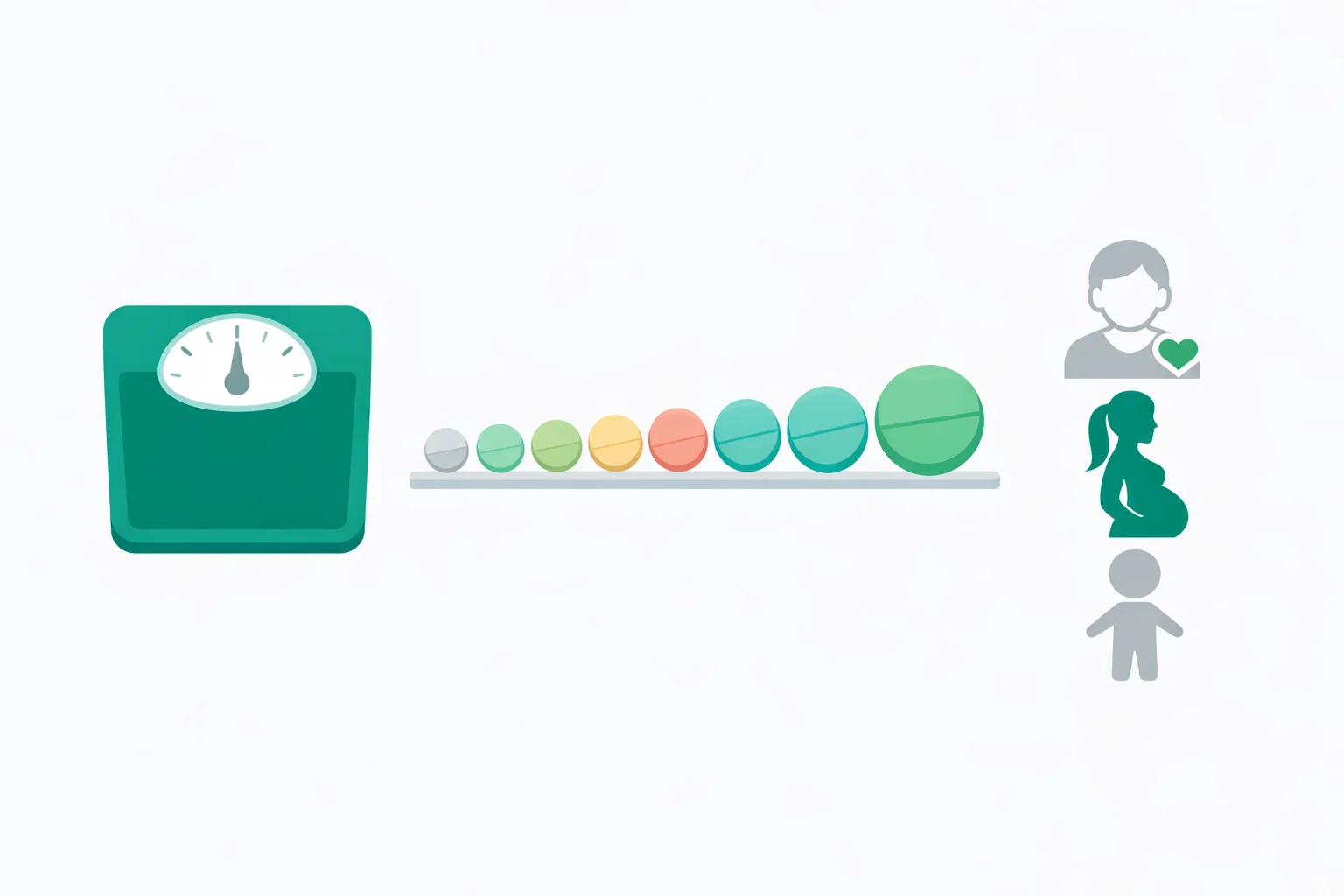
For an otherwise healthy adult with clear-cut hypothyroidism, the standard levothyroxine dosage is 1.6 micrograms per kilogram of body weight per day: 112 mcg for a 70 kg person, which the FDA label rounds to “100 to 125 mcg per day for a 70 kg adult”. That number is on every prescribing reference, and it is where a levothyroxine dosage calculator has to start. It is also the wrong first dose for three groups who make up a large share of new prescriptions: adults aged 65 and over and anyone with heart disease, people whose hypothyroidism is mild, and women who have just found out they are pregnant. Children are a fourth case with the opposite problem. This guide explains where 1.6 comes from, how often it lands on the right dose, what the calculator does with height, age and TSH, and how the follow-up blood test finishes the job the formula starts.
In this guide
Where the 1.6 mcg/kg rule comes from
Levothyroxine is synthetic thyroxine, the hormone a healthy thyroid makes, and full replacement means supplying the whole daily amount an absent gland would have produced. The Synthroid prescribing information states the average full replacement dose as approximately 1.6 mcg per kg per day, and the American Thyroid Association’s 2014 treatment guideline puts it at 1.6 to 1.8 mcg/kg of actual body weight for people with little remaining thyroid function. Those figures were not derived from a theory; they are the average of what patients turned out to need once their TSH had been titrated into range.
An average is a useful place to start and a poor place to stop. Studies that follow people from their first dose to the dose that finally normalizes TSH show the weight rule alone is roughly a coin flip. In Mistry and colleagues’ prospective series of 100 adults after total thyroidectomy, 1.6 mcg/kg landed within 25 mcg of the eventual dose in 59% of patients, better than the 40% achieved by giving everyone 100 mcg. In Zaborek and colleagues’ analysis of 598 patients, the same rule predicted a dose within 12.5 mcg of the right one for 51.3%. In Di Donna and colleagues’ cohort of 92, only 40% were euthyroid at the first follow-up. The calculator’s job is therefore to produce a defensible first guess, expressed in tablets that exist, and to say clearly what the TSH check at 6 to 8 weeks is for.
Full dose on day one: what the Roos trial showed
Starting at the full estimate, rather than creeping up from 25 mcg, is the right default for younger, otherwise healthy adults. In the only randomized trial to test the question, Roos and colleagues assigned 50 newly diagnosed adults without cardiac symptoms (mean age 47, median TSH in the 50s) to a full 1.6 mcg/kg start or to 25 mcg increased every four weeks. Nobody in either group had a cardiac event, including on exercise testing. By week 8, 19 of 25 patients on the full dose had a normal TSH compared with 3 of 25 on the low-dose schedule, although symptoms and quality of life improved at the same pace in both groups. The low start delayed the biochemistry without buying any safety in this population.
How often each starting scheme lands on the final dose
| Scheme | Inputs | Reported accuracy | Source |
|---|---|---|---|
| Fixed 100 mcg for everyone | None | 40% within 25 mcg of the final dose | Mistry 2011, n = 100 |
| 1.6 mcg/kg of actual weight | Weight | 59% within 25 mcg; 51.3% within 12.5 mcg; 40% euthyroid at first visit | Mistry 2011; Zaborek 2019, n = 598; Di Donna 2014, n = 92 |
| BMI-adjusted: (2.13 − 0.018 × BMI) mcg/kg | Weight, height | Best published scheme in the 598-patient comparison at 60.9% within 12.5 mcg | Ojomo 2013, n = 122; Zaborek 2019 |
| BMI and age nomogram, 1.4 to 1.8 mcg/kg | Weight, height, age | 68% euthyroid at first visit in a prospective group of 31, versus 41% for the best earlier scheme | Di Donna 2014 |
| Weight − age + 125 (simplified regression) | Weight, age | 72% within 25 mcg | Mistry 2011 |
| Poisson regression, seven variables | Weight, BMI, age, sex, pre-operative TSH, supplements | 64.8% within 12.5 mcg | Zaborek 2019 |
Two things stand out. Every scheme that adds body composition or age beats weight alone, and none of them gets past about two-thirds. The calculator shows the weight rule and the BMI-adjusted figure side by side for that reason: the gap between them is an honest picture of the uncertainty, and the blood test resolves it.
Actual weight, ideal body weight or lean mass?
Thyroxine is taken up and metabolized by lean tissue, chiefly muscle and liver, and fat contributes little. Santini and colleagues showed this directly in 2005 by measuring body composition with DXA scans in 75 patients on suppressive doses: the dose correlated with total weight, but far more strongly with lean body mass than with fat mass. The ATA guideline draws the same conclusion, noting that two studies found ideal body weight a better predictor of dose than actual weight and that “the daily LT4 dose is more dependent on lean body mass than total body weight, which explains why the elderly often require lower doses”.
What 720 titrated patients actually needed per kilogram
The measured numbers matter, because a common shortcut, multiplying 1.6 by ideal body weight, gets the wrong answer. In a 2025 cohort of 720 adults with primary hypothyroidism titrated to a normal TSH, the mean requirement was 1.51 mcg per kg of actual weight, 2.09 mcg per kg of Devine ideal body weight and 2.36 mcg per kg of lean body mass. Split by BMI, the actual-weight figure fell from 1.73 mcg/kg at a normal BMI to 1.51 when overweight and 1.33 at a BMI of 30 or more, while the lean-mass figure stayed at 2.35 to 2.37 across all three groups. So 1.6 mcg/kg of ideal weight would have under-dosed almost everyone, and 1.6 mcg/kg of actual weight over-doses people with obesity by 15 to 20%. The calculator therefore keeps actual weight as the headline, shows the Devine ideal body weight for context, and uses the Ojomo regression to move the per-kilogram figure with BMI.
The BMI-adjusted formula the calculator uses
Ojomo and colleagues built that regression from 122 adults after thyroidectomy. On plain weight-based dosing only 32% were euthyroid at their first visit; 53% of those with a BMI over 30 had been overdosed and 46% of those with a BMI under 25 underdosed. Their line of best fit, 2.13 minus 0.018 times BMI in mcg/kg, equals the label’s 1.6 at a BMI of about 29, rises to 1.7 for a lean adult and falls towards 1.1 mcg/kg above a BMI of 50. If you want the body-composition inputs themselves, the ideal body weight calculator gives the Devine figure the tool uses, the lean body mass calculator estimates the tissue that actually sets the requirement, and the BMI calculator shows which band you fall into.
Exception one: age 65 and over, and anyone with heart disease
Thyroid hormone increases heart rate, cardiac contractility and oxygen demand. The label’s warning section says over-treatment may precipitate angina or arrhythmias, particularly in patients with cardiovascular disease and in elderly patients, and that therapy in this population should begin at lower doses than in younger people. The 2017 version of the label spelled the numbers out: for elderly patients or patients with underlying cardiac disease, start with 12.5 to 25 mcg per day and increase every 6 to 8 weeks. NICE’s 2019 guideline uses 25 to 50 mcg per day with titration for adults aged 65 and over or with a history of cardiovascular disease, and reserves the 1.6 mcg/kg start, rounded to the nearest 25 mcg, for those under 65 without it. The ATA is categorical about coronary artery disease: such patients “should always be started on a low LT4 dose (12.5 to 25 mcg/d)”.
Age without heart disease, and how much less older adults need
Age without heart disease is less clear-cut. The ATA notes that older people who are free of known heart disease can be started at the full dose, citing the same randomized evidence, but that many experts still prefer “start low and go slow” because there is little to gain from speed and some risk unless cardiovascular disease has been ruled out. The calculator follows the guidelines rather than the trial: at 65 or over it switches to the low-start plan and shows both the label and NICE ranges. Older adults also end up needing less. The 2017 label says the full replacement dose may be under 1 mcg/kg in elderly patients, and in the Baltimore Longitudinal Study of Aging, euthyroid participants aged 65 and over averaged 1.09 mcg/kg of actual weight (1.35 mcg/kg of ideal weight), with 84% below 1.6 mcg/kg and those with obesity averaging 0.9 mcg/kg. Thyroxine turnover falls with age as lean mass falls, so the young-adult rule overshoots by about a third.
A higher TSH target after 70
The target is different too. The ATA reports that in one study 36% of people over 65 taking levothyroxine had a subnormal TSH, that a TSH below 0.1 mIU/L in this age group carried a threefold risk of atrial fibrillation over ten years, and that the 97.5th percentile of TSH in healthy elderly people is 7.5 mIU/L. It concludes that it is reasonable to raise the target TSH to 4 to 6 mIU/L in people over 70 to 80. That is why the adjustment tab lets you set the target range instead of assuming 0.4 to 4.0, and why the TSH levels calculator shows age-specific ranges. For the wider principle of starting low in older adults, the geriatric dose calculator covers the renal and age adjustments that apply to other drugs.
Exception two: mild hypothyroidism with a TSH under 10
The 1.6 mcg/kg figure assumes the thyroid is contributing almost nothing. Most people with a newly raised TSH still have a working gland, and the ATA guideline states that the dose depends on the cause: people who are athyreotic after surgery or radioiodine need more than people with Hashimoto’s thyroiditis, and the size of the TSH elevation at diagnosis predicts the eventual requirement. Its practical rule is to base the starting dose on TSH, with full replacement of roughly 1.6 mcg/kg (0.73 mcg/lb) when TSH is markedly elevated and lower doses of 25 to 50 mcg when TSH is 10 mIU/L or less or the hypothyroidism is subclinical. The Synthroid label gives a per-kilogram version in its pregnancy table: 1.6 mcg/kg for moderate to severe disease and 1.0 mcg/kg when TSH is under 10. The calculator applies that 1.0 figure to any adult with a pre-treatment TSH between the reference limit and 10 and shows the 25 to 50 mcg alternative beside it.
Whether to treat below 10 at all
Whether to treat at all below 10 is a separate decision the calculator does not make. NICE reserves treatment for adults whose TSH is 10 or higher on two tests three months apart and offers only a six-month trial to symptomatic adults under 65 with a TSH between the reference limit and 10. The ATA’s pediatric recommendation says treatment is generally not recommended at a TSH of 5 to 10. The trial evidence behind that caution in older adults is described on the TSH levels page: normalizing TSH in adults over 65 with subclinical hypothyroidism did not improve tiredness or thyroid symptoms. A mildly raised TSH is evidence of a pituitary that is responding, not of a metabolism that has failed, and a dose chosen from the full-replacement formula in that setting is the commonest route to a suppressed TSH six weeks later.
Exception three: pregnancy needs more, and needs it early
Pregnancy raises the requirement through several mechanisms at once: estrogen increases thyroxine-binding globulin, so more hormone is bound and less is free; the placenta and fetus draw on the maternal supply; and the fetal thyroid does not function until around week 12. Alexander and colleagues measured the effect prospectively in 20 pregnancies in 19 women with treated hypothyroidism. Seventeen needed a higher dose, the requirement rose by a mean of 47% during the first half of pregnancy, the increase began as early as the fifth week with a median onset at eight weeks, and it plateaued by week 16 and persisted to delivery. They proposed increasing the dose by about 30% as soon as pregnancy is confirmed, and that became the guideline.
The two-tablet rule and the THERAPY trial
The ATA’s 2017 pregnancy guideline tells women already on levothyroxine to increase the dose by 20 to 30% independently as soon as pregnancy is diagnosed and to contact their clinician, and suggests two additional tablets a week as one way to do it. The 2014 treatment guideline gives the same instruction, with the two extra doses taken on two days several days apart, and adds that up to 70% of women eventually need adjustments of 30% or more from the preconception dose and that a preconception TSH under 2.5 mIU/L is the aim. The two-tablet rule was tested in the THERAPY trial: Yassa and colleagues randomized 60 women to two or three extra tablets a week at the positive test. Both prevented TSH from rising above 5 during the first trimester, but three tablets pushed TSH below 0.5 in 15 of 23 women compared with 8 of 25 on two, so two is the better default. Testing TSH every four weeks caught 92% of abnormal values, which is why both the ATA and the label monitor at that interval until mid-pregnancy, with at least one further check near 30 weeks.
What the label says, and a quirk of fixed steps
The label frames the increase differently: 12.5 to 25 mcg per day, TSH every 4 weeks until a stable dose keeps it in the trimester-specific range, a return to the pre-pregnancy dose immediately after delivery, and a TSH at 4 to 8 weeks postpartum. For hypothyroidism first diagnosed in pregnancy it uses 1.6 mcg/kg when TSH is 10 or more and 1.0 mcg/kg below that. The pregnancy tab shows all of these in tablets, and the arithmetic reveals a quirk worth knowing: two extra tablets a week is always a 28.6% rise (nine tablets instead of seven), whereas a fixed 25 mcg step is 25% of a 100 mcg dose but only 18% of a 137 mcg dose, below the ATA band. Interpreting the trimester-specific TSH limits is covered on the TSH levels page, and the pregnancy week calculator keeps the four-weekly schedule on track.
Children: the label table and why per-kilogram doses fall with age
Children are the mirror image of the older-adult problem. Growth and brain development demand more thyroxine per kilogram, and the label doses by age band: 10 to 15 mcg/kg/day from birth to 3 months, 8 to 10 from 3 to 6 months, 6 to 8 from 6 to 12 months, 5 to 6 from 1 to 5 years, 4 to 5 from 6 to 12 years, 2 to 3 for adolescents whose growth and puberty are incomplete, and 1.6 once they are complete. The ATA gives the same picture in its own words, with newborns typically needing 10 mcg/kg/day, one-year-olds 4 to 6, adolescents 2 to 4, and a transition to the adult 1.6 once maturation is complete. In congenital hypothyroidism the ATA recommends starting at 10 to 15 mcg/kg/day as soon as newborn screening is positive, because doses in that range normalize T4 within two to three weeks whereas doses under 8 mcg/kg take six to eight, and the severity and duration of the deficit, not the starting dose itself, is what predicts later development.
Monitoring and giving the dose in children
Monitoring is tighter than in adults. The label measures TSH and total or free T4 at 2 and 4 weeks after starting, 2 weeks after any dose change, and then every 3 to 12 months until growth is complete; in newborns it expects T4 to reach the upper half of the reference range within 2 weeks and TSH to fall below 20 mIU/L within 4 weeks, and it says to check the dose and how it is given before increasing if that has not happened. Two special cases lower the first dose: newborns at risk of cardiac failure, and children at risk of hyperactivity, who start at one-quarter of the full dose and add a quarter each week. Tablets can be crushed in 5 to 10 mL of water and given at once by spoon or dropper, never in soy-based formula; the ATA adds that iron, calcium and simethicone colic drops also reduce absorption. The child tab reproduces the label bands; for weight-based dosing of other pediatric medicines, the pediatric dose calculator covers the general mg/kg method.
A worked example from first prescription to pregnancy
Take a 46-year-old woman weighing 80 kg at 170 cm, with a TSH of 34 mIU/L from Hashimoto’s thyroiditis, no heart disease and no other medicines. The table carries her through the calculator’s tabs; every number is the published rule applied to those inputs, not an observation.
| Step | Arithmetic | Result and reading |
|---|---|---|
| Full replacement estimate | 1.6 × 80 kg | 128 mcg/day. Nearest tablet 125 mcg; alternating 125 and 137 averages 131 |
| BMI-adjusted estimate | BMI 80 ÷ 1.70² = 27.7; (2.13 − 0.018 × 27.7) = 1.63 mcg/kg × 80 | 130.5 mcg/day. Planning range 128 to 131 mcg: the two estimates agree, as they do for most people with a BMI near 29 |
| Ideal body weight | 170 cm = 66.9 in; 45.5 + 2.3 × 6.9 | 61.4 kg. Note that 1.6 × 61.4 = 98 mcg would undershoot; measured requirements run about 2.1 mcg per kg of ideal weight |
| Starting plan | Age 46, no cardiac disease, TSH 34 (10 or more) | Full dose from day one: 125 mcg daily, TSH in 6 to 8 weeks |
| Week 8: TSH 6.2 | Above the 4.0 upper limit; +12.5 = 137.5, +25 = 150 | Increase one step to the 137 mcg tablet; recheck in 6 to 8 weeks |
| Week 16: TSH 1.9 | Inside 0.4 to 4.0 | Hold at 137 mcg (1.71 mcg/kg). ATA: TSH again in 4 to 6 months, then yearly; label: every 6 to 12 months |
| Two years later: positive pregnancy test on 137 mcg | (7 × 137 + 2 × 137) ÷ 7 = 176.1 | Two extra tablets a week: 176 mcg/day average, +28.6%, inside the ATA 20 to 30% band. The label’s +25 mcg step gives 162 mcg (+18.2%) and falls short of it |
| Pregnancy monitoring | TSH every 4 weeks to mid-pregnancy, once near 30 weeks | Expect a further rise: mean requirement +47% by week 16 in Alexander’s cohort. Back to 137 mcg after delivery, TSH at 4 to 8 weeks postpartum |
What the example shows, and how it changes at 68 with atrial fibrillation
The example makes the calculator’s logic visible. The formula chose the first tablet; body composition confirmed it; the blood test moved it one step; and pregnancy reset the arithmetic in a way a fixed microgram step could not match. Had the same woman been 68 with atrial fibrillation, the first line of the table would have read 25 mcg, and the path to 137 would have taken four or five increments at six-to-eight-week intervals.
TSH-guided titration: the rules the adjustment tab applies
The ATA’s recommendation on initiating and adjusting therapy is short: start at full or partial replacement, titrate upward using TSH as the goal, adjust when there are large changes in body weight, with aging and with pregnancy, and assess TSH 4 to 6 weeks after any dosage change. Its discussion explains the timing. Levothyroxine has a half-life of about a week, so blood levels reach steady state at four to six weeks and TSH reaches its new floor at the same time; adjustments of 12.5 to 25 mcg a day are then made up or down, TSH is repeated in another 4 to 6 weeks until the target is reached, and thereafter it is measured at 4 to 6 months and then yearly. The Synthroid label is slightly more conservative: 6 to 8 weeks after any change, then every 6 to 12 months once stable. The adjustment tab flags a test taken under 4 weeks after a change as too early to act on and a test at 4 to 5 weeks as early in the window.
Step size, weekly totals and adherence
The step size is small because the response is not linear. TSH moves logarithmically with free thyroxine, so a 25 mcg change can shift TSH by several units while free T4 barely moves, which is why guidelines take one step and wait rather than jumping to a calculated target. The weekly view on the adjustment tab shows a finer control that the ATA itself endorses in a different context: because the hormone accumulates over weeks, an extra tablet on one day a week adds one-seventh, about 14%, to the average daily dose, and the guideline notes that the whole week’s dose can even be given once weekly when daily adherence cannot be sustained. Self-reported non-adherence runs at about 22% in one survey the ATA cites, so a persistently high TSH on an apparently adequate dose is more often a missed-tablet or absorption problem than a dosing one. The label says the same: doses above 200 mcg a day are seldom required, and a poor response above 300 mcg points to compliance, malabsorption or drug interactions.
Absorption, interacting drugs and over-replacement
Absorption is where most of those problems live. The label’s instructions are to take the tablet once daily on an empty stomach, half an hour to an hour before breakfast, and at least 4 hours apart from calcium carbonate, ferrous sulfate, sevelamer, lanthanum and bile-acid resins, all of which bind it in the gut; proton-pump inhibitors, sucralfate and antacids lower absorption by reducing stomach acid, and soybean flour, cottonseed meal, walnuts, dietary fibre and grapefruit juice interfere with it. Biotin supplements do not change the dose but corrupt the assay, so the label says to stop them at least 2 days before a thyroid test.
Requirements also rise when estrogen is started, because thyroxine-binding globulin rises: the ATA cites TSH climbing from 0.9 to about 3.2 mIU/L within 12 weeks of estrogen in treated postmenopausal women. Enzyme inducers such as phenobarbital, rifampin, carbamazepine and phenytoin, and the antidepressant sertraline, can raise the requirement too. Over-replacement is not harmless: a suppressed TSH on treatment, especially below 0.1, is linked in the label and the ATA discussion to atrial fibrillation, angina and bone loss, most of all in older people and postmenopausal women.
When this calculator is the wrong tool
Everything above assumes primary hypothyroidism, where the pituitary is healthy and TSH is a reliable readout. In secondary or tertiary hypothyroidism, caused by pituitary or hypothalamic disease, the label says TSH must not be used to titrate; free T4 is kept in the upper half of the normal range instead, and the adjustment tab’s logic does not apply. TSH suppression after thyroid cancer surgery is a different regimen with a different target: the label notes it usually needs more than 2 mcg/kg per day, and the ATA quotes 2.1 to 2.7 mcg/kg, so the calculator would under-estimate. Myxedema coma is treated with intravenous thyroid hormone, not tablets.
Levothyroxine is contraindicated in uncorrected adrenal insufficiency, which must be treated with glucocorticoids first, and its boxed warning states that it must not be used for obesity or weight loss, where doses in the replacement range are ineffective and larger ones are dangerous. Liquid and softgel formulations absorb differently from tablets, and the calculator’s tablet strengths are the US list; other countries market different strengths. For the general mg/kg method behind other weight-based prescriptions, the dosage calculator is the right tool, and every other clinical tool on the site is listed under Clinical & Medications.
References: labels and guidelines
- AbbVie Inc. SYNTHROID (levothyroxine sodium) tablets: prescribing information. Revised February 2024 (Tables 1–3, sections 2.1, 2.4, 3, 5 and 7). rxabbvie.com
- AbbVie Inc. SYNTHROID prescribing information. Revised February 2017 (section 2.3: 12.5–25 mcg/day starting doses for elderly, cardiac and severe long-standing hypothyroidism). accessdata.fda.gov
- Jonklaas J, Bianco AC, Bauer AJ, et al. Guidelines for the treatment of hypothyroidism: prepared by the American Thyroid Association Task Force on Thyroid Hormone Replacement. Thyroid. 2014;24(12):1670–1751. PMC
- National Institute for Health and Care Excellence. Thyroid disease: assessment and management (NG145). 2019, updated 2023. nice.org.uk
- Alexander EK, Pearce EN, Brent GA, et al. 2017 Guidelines of the American Thyroid Association for the diagnosis and management of thyroid disease during pregnancy and the postpartum. Thyroid. 2017;27(3):315–389. ATA summary
References: dosing studies
- Alexander EK, Marqusee E, Lawrence J, Jarolim P, Fischer GA, Larsen PR. Timing and magnitude of increases in levothyroxine requirements during pregnancy in women with hypothyroidism. N Engl J Med. 2004;351(3):241–249. PubMed
- Yassa L, Marqusee E, Fawcett R, Alexander EK. Thyroid hormone early adjustment in pregnancy (the THERAPY) trial. J Clin Endocrinol Metab. 2010;95(7):3234–3241. PubMed
- Roos A, Linn-Rasker SP, van Domburg RT, Tijssen JP, Berghout A. The starting dose of levothyroxine in primary hypothyroidism treatment: a prospective, randomized, double-blind trial. Arch Intern Med. 2005;165(15):1714–1720. PubMed
- Ojomo KA, Schneider DF, Reiher AE, et al. Using body mass index to predict optimal thyroid dosing after thyroidectomy. J Am Coll Surg. 2013;216(3):454–460. PubMed
- Mistry D, Atkin S, Atkinson H, et al. Predicting thyroxine requirements following total thyroidectomy. Clin Endocrinol (Oxf). 2011;74(3):384–387. PubMed
- Di Donna V, Santoro MG, de Waure C, et al. A new strategy to estimate levothyroxine requirement after total thyroidectomy for benign thyroid disease. Thyroid. 2014;24(12):1759–1764. PubMed
- Zaborek NA, Cheng A, Imbus JR, et al. The optimal dosing scheme for levothyroxine after thyroidectomy: a comprehensive comparison and evaluation. Surgery. 2019;165(1):92–98. PubMed
- Santini F, Pinchera A, Marsili A, et al. Lean body mass is a major determinant of levothyroxine dosage in the treatment of thyroid diseases. J Clin Endocrinol Metab. 2005;90(1):124–127. JCEM
- Lean body mass as a predictor of levothyroxine requirement in primary hypothyroidism as compared to actual body weight. J Endocr Soc. 2025;9(12):bvaf159. PMC
- Gavigan C, et al. Levothyroxine dosing in older adults: recommendations derived from the Baltimore Longitudinal Study of Aging. Endocr Pract. 2023. PubMed
Sources checked September 7, 2026. Worked examples are calculations from the label and guideline rules, not patient observations. Formula and browser checks do not constitute independent clinical review, and nothing on this page is a prescription.

Written by Jurica Šinko
Founder & CEO
Entrepreneur and health information advocate, passionate about making health calculations accessible to everyone through intuitive digital tools.
View full profileFrequently Asked Questions
How much levothyroxine should I take for my weight?
The FDA label for Synthroid gives an average full replacement dose of about 1.6 mcg per kg of body weight per day, which it illustrates as 100 to 125 mcg for a 70 kg adult. The ATA 2014 guideline quotes 1.6 to 1.8 mcg/kg of actual weight for people with little remaining thyroid function. That figure is the eventual requirement for an otherwise healthy adult with clear-cut hypothyroidism; older adults, people with heart disease, people with mild hypothyroidism and people with a high BMI usually need less per kilogram, which is why the calculator asks for age, TSH and height as well as weight.
Does the levothyroxine dosage calculator use ideal body weight or actual weight?
It shows both views. The headline figure multiplies 1.6 mcg/kg by actual weight because that is how the label and NICE state the dose. Alongside it, the BMI-adjusted estimate from Ojomo and colleagues (2.13 minus 0.018 times BMI, per kg) lowers the per-kilogram figure as BMI rises, and the Devine ideal body weight is displayed for comparison. The ATA notes that ideal body weight predicted dose better than actual weight in two studies, and a 2025 cohort of 720 adults needed a mean 1.73 mcg/kg at a normal BMI but only 1.33 mcg/kg at a BMI of 30 or more, because lean tissue rather than fat sets the requirement.
Is 100 mcg of levothyroxine a high dose?
No. At 1.6 mcg/kg, 100 mcg is the full replacement estimate for a 62 kg adult and the label uses 100 to 125 mcg as its example for a 70 kg person. The label says doses above 200 mcg per day are seldom required, and that a poor response to more than 300 mcg per day usually means missed doses, poor absorption or an interacting medicine rather than a need for more. Whether any particular dose is right is decided by the TSH result 6 to 8 weeks after starting it, not by the number of micrograms.
How is a levothyroxine dose adjusted based on TSH?
The label adjusts in 12.5 to 25 mcg steps: up if TSH is above the target range, down if it is below, with TSH rechecked 6 to 8 weeks after any change (the ATA says 4 to 6 weeks, once the new dose has reached steady state). The adjustment tab applies exactly that rule and maps each option to a tablet strength. Because the TSH response is log-linear, a 25 mcg change can move TSH by several units, so guidelines take one step at a time. Once the dose is stable the label re-evaluates every 6 to 12 months and whenever weight, pregnancy or other medicines change.
Why do older adults start at 25 mcg instead of the weight-based dose?
Thyroid hormone raises heart rate and contractility, and the label warns that starting an older or cardiac patient at a full dose can precipitate angina or arrhythmias. The 2017 label wording starts elderly patients and anyone with heart disease at 12.5 to 25 mcg per day, NICE uses 25 to 50 mcg for adults aged 65 and over or with cardiovascular disease, and the ATA says known coronary artery disease should always begin at 12.5 to 25 mcg. Older adults also need less in the end: the label notes the full replacement dose may be under 1 mcg/kg, and in the Baltimore Longitudinal Study of Aging, euthyroid adults aged 65 and over averaged 1.09 mcg/kg.
How much should I increase levothyroxine when I find out I am pregnant?
The American Thyroid Association advises women already taking levothyroxine to increase the dose by 20 to 30 percent as soon as pregnancy is confirmed and to contact their clinician, and suggests two extra tablets a week as one way to do it: nine tablets instead of seven is a 28.6 percent rise. The Synthroid label instead increases by 12.5 to 25 mcg per day and rechecks TSH every 4 weeks until it sits in the trimester-specific range. Requirements rose by a mean of 47 percent by mid-pregnancy in the study by Alexander and colleagues, so a second increase is common. After delivery the dose returns to the pre-pregnancy level and TSH is checked 4 to 8 weeks postpartum.
What is the levothyroxine dose for a child?
The label doses children per kilogram by age: 10 to 15 mcg/kg/day from birth to 3 months, 8 to 10 from 3 to 6 months, 6 to 8 from 6 to 12 months, 5 to 6 from 1 to 5 years, 4 to 5 from 6 to 12 years, 2 to 3 for adolescents still growing and 1.6 once growth and puberty are complete. A 4-month-old weighing 6 kg therefore falls in a 48 to 60 mcg range. Children are rechecked 2 and 4 weeks after starting and 2 weeks after any change, and the pediatric endocrinologist adjusts the dose to growth, bone age and laboratory results rather than to the table alone.
How long after a dose change should TSH be tested?
Not before 4 weeks and ideally at 6 to 8 weeks. Levothyroxine has a half-life of about a week, so the blood level and the pituitary response keep drifting for four to six weeks after any change; the ATA times the first recheck at 4 to 6 weeks, when steady state has been reached, and the label monitors 6 to 8 weeks after any change in dosage. Testing earlier produces a TSH that was still going to move on its own. Stop biotin supplements at least 2 days before the blood draw, because biotin distorts the assay.
Related Calculators

Adjusted Body Weight Calculator — Dosing Weight (ABW)
Compute ABW for dosing with our adjusted body weight calculator, alongside IBW reference. Essential for accurate medication dosing, especially in obesity.

Alcohol Calculator: Drinks, Calories, Cost and BAC
Use our alcohol calculator to track standard drinks, alcohol calories, cost, and estimated BAC. Plan sessions, see time to sober, and make informed choices.

Alcohol Units Calculator UK — Weekly Tracking & Limits
Free alcohol units calculator for UK weekly tracking. Convert drinks to units, check against the 14-unit guideline, and see calories, standard drinks, and more.

BAC Calculator — Estimate Blood Alcohol Level by Drink
Use our BAC calculator to estimate blood alcohol levels from drinks, ABV, weight, sex, and hours. See limit markers, impairment ranges, and time to sober.

Caffeine Calculator: Daily Intake Tracker & Safe Limits
Use our caffeine calculator to total daily milligrams from coffee, tea, energy drinks, and custom doses, then check the running total against the 400 mg limit.
Carboplatin AUC Calculator — Calvert Formula Dosing
Free carboplatin AUC calculator using the Calvert formula to find chemotherapy dose in mg from target AUC, GFR, and Cockcroft-Gault creatinine clearance.