Use the Albumin Calculator
Free albumin calculator to interpret serum albumin levels, grade hypoalbuminemia, and compute A/G ratio plus albumin-corrected calcium from your lab results.
Albumin
3.2 g/dL
Unit System
From the “Albumin” line of your metabolic panel (CMP) or liver panel.
We subtract albumin to estimate globulin and the albumin-to-globulin (A/G) ratio.
Low albumin lowers total calcium ~0.8 mg/dL per 1 g/dL drop. We correct for it here.
Albumin Interpretation
Serum Albumin
3.2g/dL
Globulin (calc.)
3.6g/dL
A/G Ratio
0.89
Albumin Reference Ranges (Adults)
| Classification | Range |
|---|---|
| Severe hypoalbuminemia | < 2.5 g/dL |
| Moderate hypoalbuminemia | 2.5 – 2.9 g/dL |
| Mild hypoalbuminemia | 3.0 – 3.4 g/dL |
| Normal | 3.5 – 5.0 g/dL |
| High (hyperalbuminemia) | > 5.0 g/dL |
Typical adult lab values; some labs use 3.4–5.4 g/dL. Always compare with your own lab's reference interval.
What your A/G ratio suggests
Low A/G ratio (0.89). Normal is roughly 1.1–2.5. A low ratio points to either low albumin (liver/kidney disease, inflammation) or high globulin (chronic infection, autoimmune disease, multiple myeloma).
Disclaimer
This albumin calculator is for education only and does not replace professional medical advice. A single albumin value should always be read alongside your other labs, symptoms, and clinical history. Discuss abnormal results with your healthcare provider.
Educational tool, not medical advice. Check this tool’s method and limitations before interpreting a result. Talk to a qualified healthcare professional before making decisions about medication, diet, exercise, or treatment. See our Terms of Use.
Your rating helps improve Albumin Calculator. We store only an anonymized vote (no personal data).
How to Use Albumin Calculator
Step 1: Choose your units
Select US (g/dL) or SI (g/L) to match how your lab report shows albumin. Switching converts any values you have already typed.
Step 2: Enter serum albumin
Type the albumin value from your comprehensive metabolic panel (CMP) or liver panel into the Serum Albumin field.
Step 3: Add total protein (optional)
Enter total protein to calculate your globulin level and albumin-to-globulin (A/G) ratio automatically.
Step 4: Add calcium (optional)
Enter total calcium to get an albumin-corrected calcium using the Payne formula, which adjusts for low albumin.
Step 5: Read the band and ranges
See whether your albumin is normal or graded mild, moderate, or severe low, then check the highlighted row in the reference table.
Key Features
- Grades albumin as normal, mild, moderate, or severe hypoalbuminemia
- Calculates globulin and the albumin-to-globulin (A/G) ratio
- Applies Payne albumin correction to total calcium
- Switches between US (g/dL) and SI (g/L) units
- Color-coded reference range bar with active-band highlight
Understanding Results
Formulas Used
Serum albumin itself is measured directly by your lab, so the calculator classifies it against severity bands rather than deriving it. The two figures it does compute come from simple, validated equations. Globulin is total protein − albumin, and the albumin-to-globulin ratio is albumin ÷ globulin. For calcium, it applies Payne's correction: corrected Ca = measured Ca + 0.8 × (4.0 − albumin) in US units, where 4.0 g/dL is the standard reference albumin. In SI units the factor is 0.02 per g/L with a 40 g/L reference.
Reference Ranges & Interpretation
Normal adult albumin is 3.5–5.0 g/dL (35–50 g/L). Below that, the tool grades mild (3.0–3.4), moderate (2.5–2.9), and severe (< 2.5) hypoalbuminemia because each band carries a different clinical weight — an albumin under 3.0 g/dL is repeatedly tied to worse surgical and hospital outcomes. A normal A/G ratio runs 1.1–2.5; values outside it point either to changing albumin or to a shift in globulins. Values above 5.0 g/dL nearly always indicate dehydration, per MedlinePlus and StatPearls reference data.
Assumptions & Limitations
Albumin's 18–21 day half-life means the value reflects the past two to three weeks, not today, so it lags acute changes. Reference ranges differ for children, pregnancy (about 0.5–1.0 g/dL lower), and the very elderly, so always read against your own lab's interval. Payne's calcium correction is an approximation; a measured ionized calcium is preferred when accuracy is critical. This tool is educational and does not replace evaluation by a qualified healthcare professional.
Complete Guide: Albumin Calculator
On this page
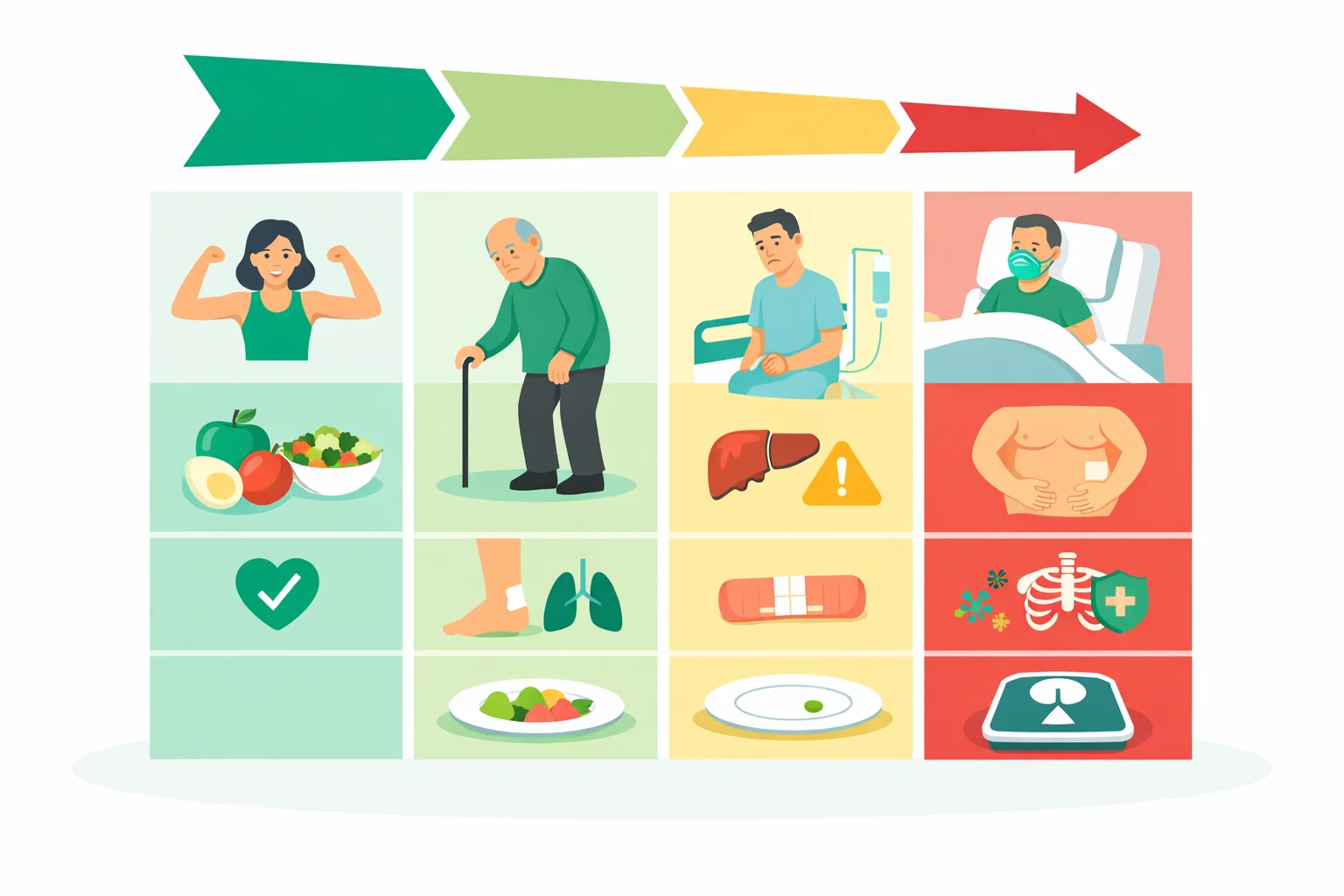
This albumin calculator takes the single number on your lab report and tells you what it means — whether 3.2 g/dL counts as mild, moderate, or severe hypoalbuminemia, and what that range typically signals about nutrition, the liver, the kidneys, and inflammation. Albumin is the most abundant protein in your blood, making up roughly 60% of total plasma protein, and the liver manufactures about 10–15 grams of it every day. Because it sits at the crossroads of so many organ systems, a low albumin is one of the most common abnormal results people ask about — and one of the most misread.
Below, the tool also estimates your globulin and albumin-to-globulin (A/G) ratio if you enter total protein, and applies albumin correction to your calcium if you enter that too. Think of it as a serum albumin calculator and a low albumin calculator in one: it reads your value against the albumin normal range and flags exactly how far above or below it you sit. This guide explains each output, the thresholds behind the color bands, and the specific conditions that move the number.
What serum albumin actually measures
Albumin does two jobs that explain almost everything about how the result is interpreted. First, it generates roughly 75–80% of plasma oncotic (colloid) pressure — the pull that keeps fluid inside blood vessels. When albumin falls below about 2.5 g/dL, that pull weakens and fluid leaks into tissues, which is why severe hypoalbuminemia shows up as ankle edema, ascites, or a puffy face. Second, albumin is a transport truck: it carries calcium, magnesium, bilirubin, free fatty acids, and many drugs (warfarin, phenytoin, furosemide). A low albumin therefore changes both your fluid balance and how much “free,” active drug or calcium is actually circulating.
One detail trips people up: albumin has a half-life of about 18–21 days. That long turnover means the value reflects the last two to three weeks, not yesterday. After an acute illness or surgery, albumin can drop sharply within 24–48 hours (because inflammation reroutes the liver toward making C-reactive protein instead), but it recovers slowly. Prealbumin (transthyretin), with its 2-day half-life, is the marker used when clinicians need a fresher snapshot of nutrition.
Reading your number: normal vs. hypoalbuminemia
Most US labs report a normal adult albumin of 3.5–5.0 g/dL (35–50 g/L in SI units). The calculator splits everything below 3.5 into three severity bands because the clinical meaning of a 3.3 is very different from a 2.1. These cutoffs follow the grading used in many hospital and trial settings:
| Band | US (g/dL) | SI (g/L) | Typical meaning |
|---|---|---|---|
| Normal | 3.5–5.0 | 35–50 | Healthy synthesis, adequate nutrition |
| Mild low | 3.0–3.4 | 30–34 | Often inflammation or mild illness |
| Moderate low | 2.5–2.9 | 25–29 | Edema risk rises; investigate cause |
| Severe low | < 2.5 | < 25 | Strong link to poor outcomes |
| High | > 5.0 | > 50 | Almost always dehydration |
The prognostic weight of these bands is real. Across surgical and hospitalized populations, an albumin under 3.0 g/dL is consistently tied to higher complication and mortality rates, and many surgeons treat a preoperative albumin below 3.5 g/dL as a flag for nutritional optimization before an elective procedure. That is the practical reason this calculator separates 3.3 from 2.3 instead of just saying “low.” Clinicians often pair a low albumin with CBC-derived inflammation markers — the neutrophil to lymphocyte ratio calculator computes the NLR that appears alongside albumin in several composite prognostic scores.
Why albumin drops: the five main mechanisms
Hypoalbuminemia is never a diagnosis by itself — it is a clue. There are only five ways the number falls, and matching your other labs to one of them is how clinicians narrow it down:
| Mechanism | Examples | Tell-tale clue |
|---|---|---|
| Reduced synthesis | Cirrhosis, advanced liver disease | High INR, low platelets, high bilirubin |
| Urinary loss | Nephrotic syndrome | Protein in urine, heavy edema |
| Gut loss | Protein-losing enteropathy, IBD | Diarrhea, low immunoglobulins too |
| Inflammation | Sepsis, trauma, cancer, burns | High CRP, acute onset |
| Poor intake | Malnutrition, malabsorption | Weight loss, low prealbumin |
Because the liver is the only factory for albumin, a persistently low value is a core component of liver scoring. If you are tracking chronic liver disease, the same albumin figure feeds directly into the Child-Pugh score, and you can see the broader enzyme picture with the liver function calculator. When the cause is suspected to be the kidneys leaking protein, pair this result with the kidney function calculator to check filtration at the same time.
Total protein, globulin, and the A/G ratio
Your comprehensive metabolic panel reports total protein as well as albumin. Subtract one from the other and you get globulin, the family of antibodies and transport proteins that make up the rest. The calculator does this for you: enter a total protein of 7.0 g/dL with an albumin of 4.2 g/dL and it returns a globulin of 2.8 g/dL and an A/G ratio of 1.5. A normal A/G ratio sits between roughly 1.1 and 2.5.
The ratio matters because it separates two different problems that both lower albumin's share of the total. A low A/G ratio can mean albumin is falling (liver or kidney disease) or that globulins are rising — the latter is a classic flag for chronic infection, autoimmune disease, or a monoclonal gammopathy such as multiple myeloma, which is why an unexplained low A/G ratio sometimes triggers protein electrophoresis. A high ratio is far less common and usually reflects low globulin. The single albumin number can't make this distinction; the ratio can.
How low albumin fakes a low calcium
About 40% of the calcium in your blood rides on albumin. When albumin drops, your total calcium drops with it — but the biologically active ionized calcium can be perfectly normal. Read the total calcium at face value and you risk chasing a “low calcium” that doesn't exist. The standard fix is Payne's correction: add 0.8 mg/dL of calcium for every 1 g/dL the albumin sits below 4.0 g/dL.
Worked example: a patient has a total calcium of 8.4 mg/dL (flagged low) and an albumin of 2.5 g/dL. The correction is 0.8 × (4.0 − 2.5) = 1.2 mg/dL, giving a corrected calcium of 9.6 mg/dL — squarely normal. Enter calcium into the tool above and it runs this automatically. For a dedicated version with ionized-fraction estimates and SI handling, use the corrected calcium calculator. Keep in mind the correction is an approximation; when calcium decisions are critical, a measured ionized calcium is the gold standard. Calcium isn't the only value low albumin distorts, either — the same missing protein conceals roughly 2.5 mEq/L of anion gap per 1 g/dL, which is what the albumin-corrected anion gap calculator is built to expose.
When albumin runs high
A high albumin (above 5.0 g/dL) almost never means you are making too much protein. The liver simply can't over-produce albumin to that degree. Instead, a high reading is nearly always hemoconcentration — the plasma water has shrunk, so every protein looks more concentrated. Dehydration from vomiting, diarrhea, diuretics, or a tourniquet left on too long during the blood draw will all nudge it up. The practical move is to rehydrate and recheck; a genuinely “high” albumin that persists after good hydration is unusual and worth a conversation with your provider.
Mistakes the albumin calculator helps you catch
The first mistake is treating albumin as a pure nutrition meter. It dips in inflammation regardless of how well you eat, so a low value during an infection is expected and recovers as you heal — it is not proof of malnutrition. The second is ignoring posture and tourniquet time: standing up or a prolonged tourniquet can raise albumin by 0.2–0.5 g/dL through fluid shifts, enough to cross a band. The third is comparing your number to the wrong reference; pediatric, pregnant, and very elderly ranges differ, and pregnancy normally lowers albumin by about 0.5–1.0 g/dL through dilution. Always read your value against the interval printed on your own report, and trend it over weeks rather than reacting to one draw.
References
- MedlinePlus (NIH). “Albumin Blood Test.” medlineplus.gov
- National Library of Medicine, StatPearls. “Hypoalbuminemia.” ncbi.nlm.nih.gov
- Payne RB, et al. “Interpretation of serum calcium in patients with abnormal serum proteins.” BMJ 1973.

Written by Jurica Šinko
Founder & CEO
Entrepreneur and health information advocate, passionate about making health calculations accessible to everyone through intuitive digital tools.
View full profileFrequently Asked Questions
What albumin level is considered dangerously low?
Albumin below 2.5 g/dL (25 g/L) is graded as severe hypoalbuminemia and is linked to fluid leaking into tissues, causing edema or ascites. Levels under 3.0 g/dL are consistently associated with higher complication and mortality rates in hospitalized and surgical patients. Any value under 3.5 g/dL should be investigated for a cause.
What is a normal albumin level for an adult?
Most labs report a normal adult range of 3.5 to 5.0 g/dL (35 to 50 g/L). Some labs use 3.4 to 5.4 g/dL. Levels naturally fall about 0.5 to 1.0 g/dL in pregnancy due to dilution, so always compare against the reference interval printed on your own report.
Does low albumin always mean poor nutrition?
No. Albumin drops during inflammation, infection, and after surgery regardless of how well you eat, because the liver shifts toward making C-reactive protein instead. It also falls with liver disease, kidney protein loss, and gut protein loss. A low albumin during an acute illness is expected and usually recovers as you heal.
How does low albumin affect my calcium level?
About 40% of blood calcium is bound to albumin, so when albumin falls, total calcium falls too even when the active ionized calcium is normal. The Payne correction adds 0.8 mg/dL of calcium for every 1 g/dL the albumin is below 4.0 g/dL. Enter your calcium into the calculator and it applies this correction automatically.
What is the albumin-to-globulin (A/G) ratio?
The A/G ratio compares albumin to globulin (total protein minus albumin), and a normal value runs about 1.1 to 2.5. A low ratio can mean falling albumin or rising globulins, the latter pointing to chronic infection, autoimmune disease, or multiple myeloma. Enter your total protein and the calculator computes globulin and the ratio for you.
Why is my albumin high?
An albumin above 5.0 g/dL almost always reflects dehydration rather than overproduction, because the liver cannot make excess albumin to that degree. When plasma water shrinks, every protein looks more concentrated. A prolonged tourniquet during the blood draw can also raise it. Rehydrate and recheck before assuming a problem.
How long does it take for albumin to return to normal?
Albumin has a half-life of roughly 18 to 21 days, so it reflects the last two to three weeks and recovers slowly after an illness or surgery. If a faster nutrition snapshot is needed, prealbumin (transthyretin) has a 2-day half-life and responds within days.
Related Calculators
A1C Calculator — Convert HbA1c to eAG with Targets
Use our A1C calculator to convert HbA1c to estimated average glucose (eAG). See normal, prediabetes, and diabetes thresholds in mg/dL and mmol/L. Fast results.
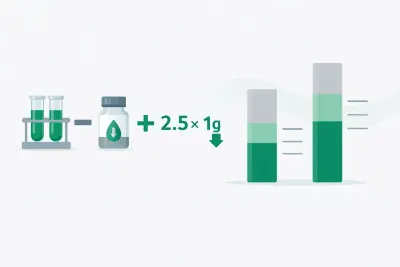
Albumin-Corrected Anion Gap Calculator — Hidden Acidosis
Use our albumin-corrected anion gap calculator to raise the anion gap by 2.5 per 1 g/dL of low albumin and reveal a hidden high-gap metabolic acidosis.

ANC Calculator: Absolute Neutrophil Count & Neutropenia
Free ANC calculator to calculate absolute neutrophil count from WBC and differential. Get ANC in cells/uL and x10^9/L with instant neutropenia grading.
Anion Gap Calculator — Metabolic Acidosis Evaluation
Free anion gap calculator finds serum anion gap from sodium, chloride, and bicarbonate, with albumin correction and delta ratio for metabolic acidosis.
AST/ALT Ratio Calculator — Free De Ritis Ratio Tool
Use our free AST/ALT ratio calculator to compute the De Ritis index instantly. Visual ratio chart, enzyme-level assessment, and clinical patterns guide.
Blood Pressure by Age Calculator: Normal Range Chart
Free blood pressure by age calculator: see your percentile among adults your age and sex, plus a normal range chart of average readings from age 18 to 85.