Use the Maslach Burnout Calculator
Free Maslach burnout calculator scores emotional exhaustion, depersonalization and personal accomplishment separately, then maps all three to your profile.
Burnout profile
What do you want to score?
Answer for how you have felt about your job over the past month. Fifteen statements, five for each of the three Maslach dimensions. There is no single total at the end — that is the point of the instrument, and this tool keeps the three scores separate the way the MBI does.
These are not the Maslach Burnout Inventory's own items — those 22 statements are copyrighted and sold under licence by Mind Garden, and no free website may legally reproduce them. This is an original 15-item set built for this page, scored on the same 0–6 frequency anchors and mapped to the same three dimensions, then scaled to MBI-HSS ranges so the published cutoffs apply. If you have taken the real MBI, switch to the second tab and enter your subscale totals directly.
| 0Never | 1Few/yr | 2Monthly | 3Few/mo | 4Weekly | 5Few/wk | 6Daily |
Emotional exhaustion
Energy depletion — the dimension that rises first and responds fastest to workload change.
Depersonalization
Mental distancing from the work and the people in it. Usually follows exhaustion by months.
Personal accomplishment
Sense of competence. Scored so that a LOW score is the concerning one — it is never reverse-scored.
Answer these honestly in the positive direction — here a high score is the good news.
Your three subscale scores
Instrument: Self-check (scaled to MBI-HSS ranges)
Emotional exhaustion
— / 54
not scored
Depersonalization
— / 30
not scored
Personal accomplishment
— / 48
not scored
Leiter & Maslach profile
—
Answer all 15 statements to see which of the five profiles you fall into.
Why there is no single “burnout score”
Maslach and Jackson never published a composite. The three subscales are reported separately because personal accomplishment is scored in the opposite direction — summing all three makes a healthier respondent look worse, since their high efficacy score inflates the total. Any site that hands you one “burnout score out of 100” has either invented a cutoff or scored the instrument wrong.
| Subscale | Healthy band | Moderate | Critical band | Your band |
|---|---|---|---|---|
| Emotional exhaustion | ≤ 16 | 17 – 26 | ≥ 27 | — |
| Depersonalization | ≤ 6 | 7 – 12 | ≥ 13 | — |
| Personal accomplishment | ≥ 39 | 32 – 38 | ≤ 31 | — |
Raw totals shown for the 22-item form. These bands are normative, not diagnostic: they say where you sit relative to the people in the original samples, not whether you have a condition. The MBI manual has never published a clinical cut-off, and the ICD-11 lists burnout as an occupational phenomenon rather than a medical diagnosis.
| Profile | Exhaustion | Cynicism | Efficacy | The lever that works |
|---|---|---|---|---|
| Engaged | Low | Low | High | Nothing — re-check in 3–6 months |
| Overextended | High | Low | High | Cut load: hours, caseload, on-call density |
| Disengaged | Low | High | High | Fix values, fairness and recognition — not rest |
| Ineffective | Low | Low | Low | Feedback and visible wins; screen for depression |
| Burnout | High | High | Low | Combined change plus a clinical conversation |
Two-dimension patterns sit between these five and are shown as a mixed profile above. In Leiter and Maslach's longitudinal work the overextended and disengaged profiles were the two most likely to convert to full burnout within a year, which is why a single critical dimension is worth acting on rather than waiting for all three.
Complete all three subscales to see your profile, your position against the published cutoffs, and which intervention the research associates with your specific pattern.
Burnout is classified in the ICD-11 (QD85) as an occupational phenomenon, not a medical condition, and no MBI score diagnoses anything. This tool is not the licensed Maslach Burnout Inventory and cannot substitute for it in research or occupational-health reporting — for that, the instrument must be purchased from Mind Garden. Low personal accomplishment and high exhaustion also overlap with depression, which the MBI was never designed to detect. If you are in crisis or thinking about harming yourself, call or text 988 in the US or contact local emergency services immediately.
Educational tool, not medical advice. Check this tool’s method and limitations before interpreting a result. Talk to a qualified healthcare professional before making decisions about medication, diet, exercise, or treatment. See our Terms of Use.
Your rating helps improve Maslach Burnout Calculator. We store only an anonymized vote (no personal data).
How to Use Maslach Burnout Calculator
Step 1: Choose your scoring mode
Pick "Free 15-item self-check" if you have never taken the licensed inventory, or "I already have MBI subscale totals" if you are holding a report from a real administration.
Step 2: Answer the 15 statements, or enter three totals
In self-check mode, rate each of the 15 statements from 0 (never) to 6 (every day) for how you have felt about your job over the past month. In MBI mode, type your exhaustion, depersonalization and personal accomplishment totals into the three fields.
Step 3: Select the MBI version you took
Choose "HSS / HSS-MP / ES — 22 items" or "General Survey — 16 items". The item counts differ, so the calculator swaps in the matching cutoff set and recomputes your item means.
Step 4: Read each subscale band separately
Check the three result cards for your raw total, item mean and band. A red card means that dimension has crossed its published cutoff; the reference table highlights the row it landed in.
Step 5: Act on your profile, not on a total
Read the Leiter and Maslach profile panel to see which of the five patterns your three scores form, and which intervention the research associates with that pattern. Use Copy profile summary to save all three scores.
Key Features
- Scores emotional exhaustion, depersonalization and personal accomplishment as three separate subscales — never one invented total
- Switches cutoff sets automatically between the 22-item MBI-HSS family and the 16-item MBI-GS
- Assigns one of five Leiter & Maslach profiles: Engaged, Overextended, Disengaged, Ineffective or Burnout
- Free 15-item self-check for anyone without a licensed MBI administration, scaled to MBI-HSS ranges
- Highlights your band inside the published raw-total cutoff table for each subscale
- Copy-ready profile summary for occupational health notes or month-to-month tracking
Understanding Results
Formula
There is no equation to solve — the Maslach Burnout Inventory is summed, not computed. Each item is answered on a frequency scale from 0 (never) to 6 (every day), and every item belongs to exactly one subscale:
- Emotional exhaustion = sum of its 9 items (MBI-HSS) or 5 items (MBI-GS)
- Depersonalization / cynicism = sum of its 5 items on either form
- Personal accomplishment / professional efficacy = sum of its 8 items (HSS) or 6 items (GS), summed as answered — these items are never reverse-scored
To compare across forms, divide a subscale total by its item count to get an item mean on the same 0–6 scale: an exhaustion score of 27 on the 9-item HSS subscale is an item mean of 3.00, meaning your typical answer sits between “a few times a month” and “once a week.” The calculator reports both numbers so a score from one form can be read against the other. Deliberately absent is any grand total: the three subscales measure different things and one of them runs in the opposite direction.
Reference Ranges & Interpretation
The MBI-HSS bands below are the normative tertiles published in the MBI manual by Maslach and Jackson — the 22-item form used for human services, medical personnel (HSS-MP) and educators (MBI-ES):
| Subscale (range) | Low | Moderate | High |
|---|---|---|---|
| Emotional exhaustion (0–54) | 0–16 | 17–26 | 27–54 |
| Depersonalization (0–30) | 0–6 | 7–12 | 13–30 |
| Personal accomplishment (0–48) | 0–31 | 32–38 | 39–48 |
Note the inversion on the third row: for personal accomplishment the bolded low band is the concerning one. The 16-item MBI-GS has no equivalent US tertile table, so the research literature uses item-mean criteria instead — exhaustion at or above 2.20, cynicism at or above 2.00, and professional efficacy at or below 3.66. The calculator switches between the two sets when you change version.
Bands matter less than the pattern they form. Three critical subscales is the full syndrome; one critical subscale is one of three distinct profiles — Overextended (exhaustion only), Disengaged (cynicism only) or Ineffective (low efficacy only) — and each responds to a different intervention. In the WHO's ICD-11 description (entry QD85), all three dimensions are named as defining features, which is why a single high score is a warning rather than a verdict.
Assumptions & Limitations
This tool is not the licensed MBI. The inventory's 22 statements are copyrighted and sold per administration by Mind Garden, so no free website may reproduce them. The 15-item self-check here uses original wording on the same 0–6 anchors, scaled to MBI-HSS ranges. It will identify your profile, but it cannot be reported as an MBI score in research, a thesis, or occupational-health documentation. If you need that, buy the licence.
The cutoffs are normative, not diagnostic. They mark where you sit relative to the occupational samples the instrument was normed on, and the MBI manual has never published a validated clinical threshold. A score of 26 is not meaningfully different from 27. Norms also skew towards US health, education and social-service workers from the 1980s, so they fit a night-shift nurse better than a remote software engineer — the General Survey exists precisely for that gap.
The MBI also does not screen for depression, anxiety or self-harm risk, and low personal accomplishment overlaps substantially with depressive symptoms (correlations of roughly 0.4–0.6 with standard depression scales). A burnout profile is not a reason to skip a mood screen. Talk to a doctor or occupational-health service if all three dimensions are critical, if low mood or sleep loss have come with it, or if scores stay high across two readings a month apart. If you are in crisis or thinking about harming yourself, call or text 988 in the US or contact local emergency services now.
Complete Guide: Maslach Burnout Calculator
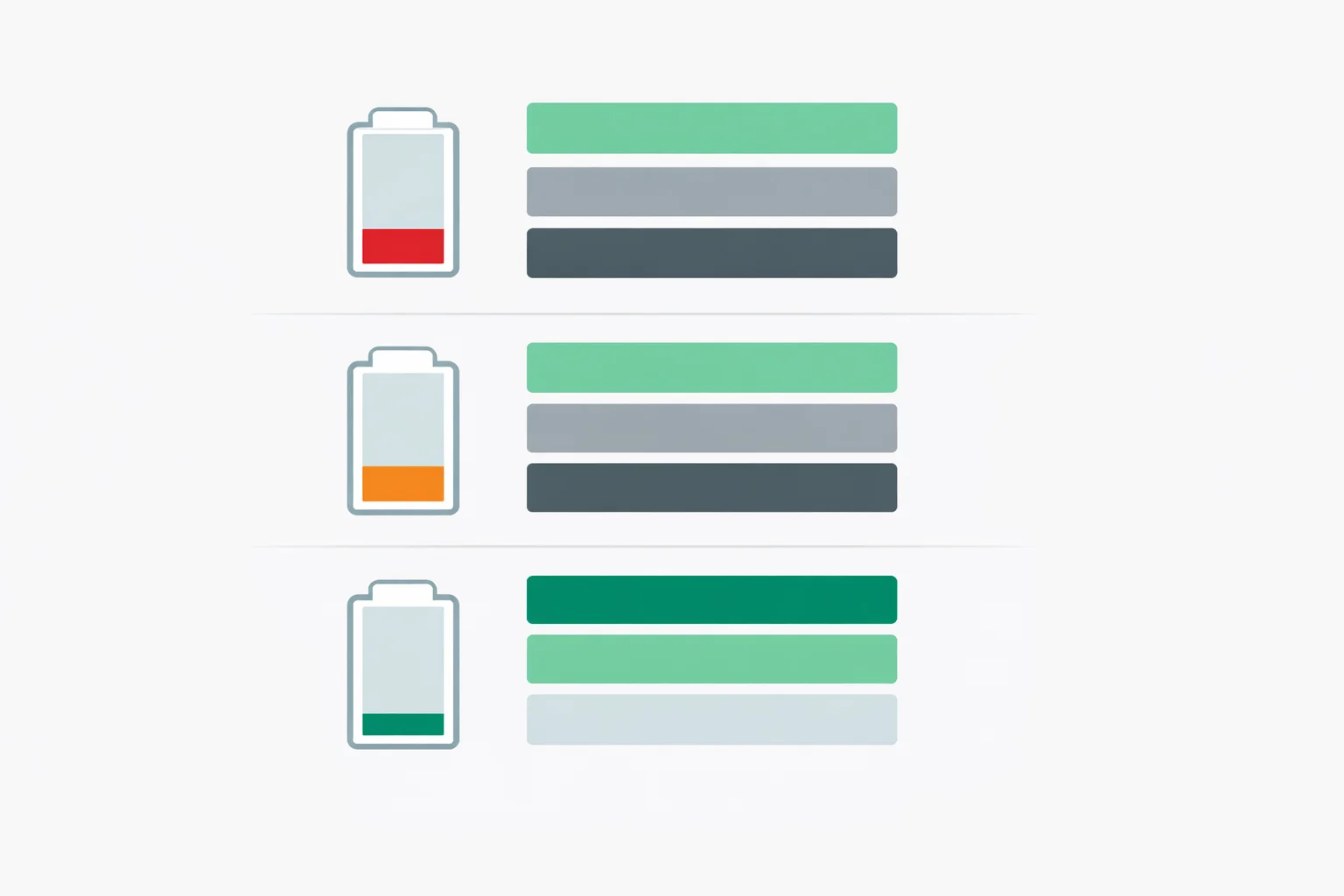
A Maslach burnout calculator scores three separate things, and the World Health Organization is unusually precise about why. ICD-11 entry QD85 defines burnout as a syndrome “resulting from chronic workplace stress that has not been successfully managed,” characterised by three dimensions: energy depletion, increased mental distance from one's job, and reduced professional efficacy. It is classified as an occupational phenomenon — explicitly not a medical condition — and the WHO adds that the term should not be applied to experiences in other areas of life. Those three dimensions are not a coincidence. They are Christina Maslach's, lifted directly from the inventory she and Susan Jackson published in 1981.
On this page
- Three numbers, never one
- Three colleagues, one word: a worked profile
- What an exhaustion score of 27 actually means
- MBI-HSS vs MBI-GS vs MBI-ES: which form produced your numbers
- Why personal accomplishment is never reverse-scored
- Burnout or depression?
- Why this Maslach burnout calculator cannot show you the real MBI items
- What to do about a single critical dimension
Three Numbers, Never One
The MBI produces one score per dimension and no composite. In the 22-item human services survey that means emotional exhaustion on a 0–54 scale from nine items, depersonalization on 0–30 from five items, and personal accomplishment on 0–48 from eight items. Each item is answered on a seven-point frequency scale from 0 (never) to 6 (every day), so the raw total for a subscale is simply the sum of its items.
Maslach has spent four decades objecting to composite scoring, and the arithmetic shows why. Personal accomplishment is worded positively and scored as written — a high score is the healthy result. Add the three subscales together and a thriving employee scoring 45 on accomplishment collects 45 points of “burnout” for being good at their job. On a naive 0–132 total, one third of the scale runs backwards. Any tool that hands you a single burnout percentage has either invented that cutoff or misread the manual.
Three Colleagues, One Word: A Worked Profile
Three nurses on the same ward each say they are burned out. They complete the MBI-HSS in the same week. Here is what actually comes back.
| Nurse | Exhaustion (0–54) | Depersonalization (0–30) | Accomplishment (0–48) | Profile |
|---|---|---|---|---|
| A | 38 (high) | 5 (low) | 42 (high) | Overextended |
| B | 14 (low) | 18 (high) | 40 (high) | Disengaged |
| C | 15 (low) | 4 (low) | 24 (low) | Ineffective |
Not one of the three meets the full syndrome, and the three need opposite things. Nurse A is running out of fuel while still caring about patients and still rating herself competent — a volume problem. Cutting two shifts a month or moving her off back-to-back nights addresses it directly. Nurse B has plenty of energy and has stopped caring, which no amount of rest touches; the literature on this pattern points at fairness, autonomy and value conflict, so the fix lives in rota policy and recognition rather than in a wellbeing app. Nurse C looks fine to everyone around him and is quietly convinced he is achieving nothing. His profile is the one most often missed, and also the one most likely to turn out to be depression rather than burnout.
Now watch what a composite score does to this ward. Summing the three subscales gives Nurse A 85, Nurse B 72 and Nurse C 43 — ranking the healthiest-looking profile as the worst affected and the man with collapsed efficacy as the least. That single ranking is what most free burnout quizzes report.
What an Exhaustion Score of 27 Actually Means
It means you sit in the top third of the sample Maslach and Jackson normed the instrument on. That is the entire claim. The MBI-HSS bands — exhaustion low at 16 or below and high at 27 or above, depersonalization low at 6 or below and high at 13 or above, accomplishment low at 31 or below and high at 39 or above — are tertile splits of a normative distribution, not clinical thresholds validated against any outcome.
The distinction has practical consequences. A score of 27 on exhaustion is one point over a line drawn through a 1980s occupational sample, and 26 is not meaningfully different from 27. Treat the bands as a map of where you sit among peers, and treat movement across two readings as the real signal: a nine-item subscale scored 0–6 per item moves roughly 9 raw points for every one-point shift in average item response, so a jump from 18 to 27 means your typical answer went from “once a month” to “a few times a month.” That is a change worth investigating. A move from 26 to 28 is noise.
MBI-HSS vs MBI-GS vs MBI-ES: Which Form Produced Your Numbers
Entering a subscale total into any calculator without knowing which form it came from is the fastest way to a wrong band. The forms have different item counts, so identical raw numbers mean different things.
| Form | Items | Subscale structure | Written for |
|---|---|---|---|
| MBI-HSS | 22 | EE 9 (0–54), DP 5 (0–30), PA 8 (0–48) | Human services: social work, counselling, policing |
| MBI-HSS (MP) | 22 | Same as HSS | Medical personnel; wording says “patients” |
| MBI-ES | 22 | Same as HSS | Educators; wording says “students” |
| MBI-GS | 16 | EX 5 (0–30), CY 5 (0–30), PE 6 (0–36) | Any occupation; no people-facing wording |
The General Survey is the one that trips people up. Its exhaustion subscale has five items, not nine, so a raw 25 there is an item mean of 5.0 — near the ceiling — while a raw 25 on the HSS is an item mean of 2.8 and lands in the moderate band. The GS also renames depersonalization to cynicism, because you cannot depersonalise a spreadsheet, and renames personal accomplishment to professional efficacy. It has no US tertile table equivalent to the HSS norms, so the field uses item-mean criteria instead: exhaustion at or above 2.20, cynicism at or above 2.00, and efficacy at or below 3.66. The calculator above switches cutoff sets automatically when you pick a version.
Why Personal Accomplishment Is Never Reverse-Scored
This is the error that shows up most often in spreadsheets and student dissertations. People see eight positively worded items sitting inside a burnout instrument, assume they must be reverse keyed the way the four positive items in the Perceived Stress Scale are, and subtract each answer from 6 before summing. It feels tidy. It is wrong.
Maslach kept the accomplishment dimension in its natural direction deliberately, because factor analyses have repeatedly found it to be a weaker and partly independent construct rather than the mirror image of exhaustion. Correlations between personal accomplishment and the other two subscales typically run below 0.30 in absolute terms, while exhaustion and depersonalization correlate around 0.50. Flipping the scores forces a three-factor instrument to behave like a one-factor one and hides exactly the profile distinction that makes it clinically useful. If your accomplishment subscale came back as 48 minus the expected value, someone reversed it. Recompute before interpreting anything.
Burnout or Depression?
The MBI was never built to tell these apart, and the overlap is largest on precisely the dimension people find hardest to read. Low personal accomplishment — worthlessness, the sense of achieving nothing — is also a core depressive symptom, and meta-analytic estimates put the correlation between emotional exhaustion and depression scales in the 0.4 to 0.6 range. The practical rule clinicians use is context: burnout is situation-bound and job-specific, so it typically eases on a two-week holiday and returns within days of going back. Depression travels with you.
If your profile came back as Ineffective — low accomplishment with intact energy and attitude — screening separately is the sensible next step rather than an optional extra. The PHQ-9 depression screener takes about two minutes and, unlike the MBI, does ask about self-harm. If the pressure feels broader than work, the general stress calculator covers exposures the MBI deliberately excludes, since the WHO restricts the burnout label to occupational context only.
Why This Maslach Burnout Calculator Cannot Show You the Real MBI Items
The Maslach Burnout Inventory is copyrighted and distributed under licence by Mind Garden, which sells it per administration — typically a few dollars per respondent, with volume licences for research. Its 22 statements are protected text. Every free site that reproduces them verbatim is infringing, and several have been taken down for it.
That is why the self-check on this page uses fifteen original statements rather than the licensed ones, five per dimension, scored on the same 0–6 frequency anchors and scaled to MBI-HSS ranges so the published bands still apply. It will place you in the right profile. It is not the MBI and cannot be reported as one in research, in a thesis, or in occupational-health documentation — for any of those, buy the licence. Free alternatives with published psychometrics do exist if you need a citable open instrument: the Copenhagen Burnout Inventory and the Oldenburg Burnout Inventory are the two most commonly used, and both are structured differently from the MBI rather than being clones of it.
What to Do About a Single Critical Dimension
Waiting for all three subscales to cross their cutoffs is the wrong strategy, because the dimensions do not arrive together. Exhaustion moves first and moves fastest; depersonalization typically follows it by months as distancing becomes a coping response to depletion; reduced accomplishment tends to arrive last and recover slowest. By the time a profile reads as full burnout, the cheapest intervention window has closed.
Match the lever to the dimension. High exhaustion alone responds to load: hours, caseload density, on-call frequency, and the length of the recovery gap between shifts. High cynicism alone does not respond to rest at all — it tracks fairness, autonomy, community and value conflict, four of the six Areas of Worklife that Leiter and Maslach identified as burnout's structural drivers. Low accomplishment alone responds to feedback and visible mastery, and needs a depression screen alongside. Two critical dimensions is the point at which changing the person reliably stops working and changing the job is what the evidence supports.
Retest in four to six weeks rather than weekly. The MBI asks about frequency of feelings, and frequency needs a window long enough to average across a bad week. Two readings four weeks apart tell you the direction of travel, and direction is worth more than any single band label. If exhaustion is the dimension that will not settle, look at recovery quality before looking at hours — the sleep efficiency calculator quantifies how much of your time in bed is actually restorative, and broken recovery is what turns a heavy month into a critical exhaustion score.
References
- World Health Organization. Burn-out an “occupational phenomenon”: International Classification of Diseases (ICD-11, QD85).
- Maslach C, Jackson SE, Leiter MP. Maslach Burnout Inventory Manual, 4th edition. Mind Garden — the licensed publisher of all MBI forms.
- Maslach C, Leiter MP. Understanding the burnout experience: recent research and its implications for psychiatry. World Psychiatry. 2016;15(2):103–111.

Written by Jurica Šinko
Founder & CEO
Entrepreneur and health information advocate, passionate about making health calculations accessible to everyone through intuitive digital tools.
View full profileFrequently Asked Questions
What is a high score on the Maslach Burnout Inventory?
On the 22-item MBI-HSS, high means emotional exhaustion of 27 or above out of 54, depersonalization of 13 or above out of 30, and personal accomplishment of 31 or below out of 48. Those three numbers are tertile splits of the original normative sample Maslach and Jackson published, not clinical thresholds. Crossing one of them tells you where you sit among peers, not that you have a diagnosable condition.
Is there a total score for the Maslach Burnout Inventory?
No, and adding the subscales together produces a number that runs backwards. Personal accomplishment is worded positively and is not reverse-scored, so a healthy employee scoring 45 out of 48 there collects 45 points of apparent burnout on a naive sum. Maslach has argued against composite scoring for four decades; any tool reporting one burnout percentage has invented it.
Can I take the real Maslach Burnout Inventory for free?
No. The MBI is copyrighted and licensed by Mind Garden, which charges per administration, so its 22 statements cannot legally appear on a free website. The self-check on this page uses 15 original statements instead, scored on the same 0 to 6 frequency scale and scaled to MBI-HSS ranges. It places you in the right profile but cannot be cited as the MBI in research or occupational-health reporting.
What is the difference between the MBI-HSS and the MBI-GS?
The MBI-HSS has 22 items written for people-facing work, split 9 exhaustion, 5 depersonalization, 8 personal accomplishment. The MBI-GS has 16 items for any occupation, split 5 exhaustion, 5 cynicism, 6 professional efficacy. Because the item counts differ, a raw exhaustion score of 25 is an item mean of 2.8 on the HSS but 5.0 on the GS, which is why picking the wrong version can move you two bands.
Is personal accomplishment reverse-scored on the MBI?
No, and reversing it is the most common MBI scoring error. The eight items are summed exactly as answered, and a high score is the healthy result. Maslach kept the dimension in its natural direction because it behaves as a partly independent construct, correlating below 0.30 with the other subscales while exhaustion and depersonalization correlate around 0.50. Flipping it hides the profile distinctions that make the instrument useful.
What does it mean if only my emotional exhaustion score is high?
That is the Overextended profile, not burnout. You are depleted but still engaged with the work and still rate yourself competent, which points at workload volume rather than the full syndrome. Hours, caseload density, on-call frequency and the recovery gap between shifts are the levers that move this profile, and it responds to load reduction better than any other pattern.
How often should I retake a burnout assessment?
Every four to six weeks, not weekly. The MBI asks how often you feel each way, so the window has to be long enough to average across one bad week. Two readings a month apart show direction of travel, which carries more information than any single band label. A move of nine raw points on a nine-item subscale equals a full one-point shift in your typical answer.
Is burnout the same as depression?
No. The ICD-11 classifies burnout under QD85 as an occupational phenomenon rather than a medical condition, and restricts the term to work context. The overlap is real though, with emotional exhaustion correlating roughly 0.4 to 0.6 with depression scales. The practical test clinicians use is portability: burnout usually eases on a two-week holiday and returns within days of going back, while depression travels with you.
Related Calculators
ADHD Test: Free Adult ASRS Screening Score, 18 Items
Free ADHD test using the WHO ASRS v1.1 screener. Answer 18 questions, score Part A against the cut-off of 4, then rule out the four conditions that mimic it.

Anxiety Calculator: Test Your Anxiety Symptom Level
Use our anxiety calculator to rate seven common symptoms, see your severity band, and get practical next steps you can try today. Free and completely private.
AUDIT Alcohol Calculator — Score Alcohol Use Disorder Risk
Use the AUDIT alcohol calculator to score the 10-item screening test, grade hazardous or dependent drinking risk, and see your zone-based intervention level.
Autism Test: Free AQ-10 Adult Screening Score (0-10)
Free autism test using the AQ-10 screening questionnaire: score 10 items against the 6-point cut-off and see what a positive result really means for you.

Bedtime Calculator: Find the Best Time to Go to Bed Now
Enter your wake time and the bedtime calculator suggests bedtimes by 90-minute cycles. Add a fall-asleep buffer and choose 12/24-hour time for better mornings.

Circadian Rhythm Calculator: Align Sleep & Wake Times
Use the Circadian Rhythm Calculator to identify your chronotype and align sleep and wake times. See optimal windows, plan meals, and get blue-light tips.