Use the LDL Cholesterol Calculator
Free LDL cholesterol calculator using the Friedewald and Sampson/NIH formulas. Estimate LDL from total cholesterol, HDL and triglycerides, plus non-HDL.
LDL is calculated, not measured directly. A fasting sample (9–12 hours) gives the most reliable triglycerides.
LDL & Non-HDL Reference Ranges
| Category | LDL (mg/dL) | Non-HDL (mg/dL) |
|---|---|---|
| Optimal | < 100 | < 130 |
| Near optimal | 100–129 | 130–159 |
| Borderline high | 130–159 | 160–189 |
| High | 160–189 | 190–219 |
| Very high | ≥ 190 | ≥ 220 |
Categories follow NCEP ATP III / ACC-AHA conventions. People with established cardiovascular disease often target LDL below 70 mg/dL. For education only — discuss personal targets with a clinician.
Educational tool, not medical advice. Check this tool’s method and limitations before interpreting a result. Talk to a qualified healthcare professional before making decisions about medication, diet, exercise, or treatment. See our Terms of Use.
Your rating helps improve LDL Cholesterol Calculator. We store only an anonymized vote (no personal data).
How to Use LDL Cholesterol Calculator
Step 1: Enter total cholesterol and HDL
Type your total cholesterol and HDL cholesterol from your lipid panel into the first two fields. Use the mg/dL or mmol/L toggle to match your report.
Step 2: Enter triglycerides
Add your triglyceride value. For the most reliable result, use a fasting sample taken after 9–12 hours without food.
Step 3: Choose a headline formula
Pick Friedewald for routine panels or Sampson/NIH for higher triglycerides. The tool auto-switches to Sampson if triglycerides exceed 400 mg/dL.
Step 4: Read your LDL and non-HDL
Your estimated LDL appears with its ACC/AHA category, both formula results side by side, and your non-HDL cholesterol as a backup number.
Key Features
- Calculates LDL with both the Friedewald (1972) and Sampson/NIH (2020) equations
- Auto-switches to Sampson/NIH when triglycerides exceed 400 mg/dL
- Reports non-HDL cholesterol as a formula-proof backup number
- Classifies LDL and non-HDL into ACC/AHA risk categories
- Toggles between mg/dL and mmol/L units
- Side-by-side comparison of both estimation methods
Understanding Results
LDL Cholesterol Calculator Formulas: Friedewald & Sampson
The Friedewald formula estimates LDL as LDL = Total Cholesterol − HDL − (Triglycerides ÷ 5) in mg/dL (divide triglycerides by 2.2 for mmol/L). The "÷ 5" term estimates the cholesterol carried in triglyceride-rich VLDL particles. The Sampson/NIH equation replaces that fixed ratio with a regression on both triglycerides and non-HDL cholesterol, so it tracks LDL more closely when triglycerides climb. Non-HDL cholesterol is the assumption-free figure Total Cholesterol − HDL.
Reference Ranges & Interpretation
Following NCEP ATP III and ACC/AHA conventions, LDL is optimal below 100 mg/dL, near optimal at 100–129, borderline high at 130–159, high at 160–189, and very high at 190 or above. Non-HDL targets sit 30 mg/dL higher (optimal below 130). People with established cardiovascular disease are often treated to LDL below 70 mg/dL, and the highest-risk patients to below 55 mg/dL. Your personal target depends on your overall risk, which the ASCVD risk calculator can estimate.
Assumptions & Limitations
Calculated LDL assumes a stable triglyceride-to-VLDL relationship, which fails above 400 mg/dL of triglycerides — Friedewald then underestimates LDL and the tool switches to Sampson/NIH automatically. Above 800 mg/dL, no equation is reliable and a direct LDL measurement is needed. Non-fasting samples, recent illness, and lab method changes can each shift the estimate by 10 mg/dL or more. This calculator is for education and screening, not a diagnosis — confirm trends with repeat testing and your clinician.
Complete Guide: LDL Cholesterol Calculator
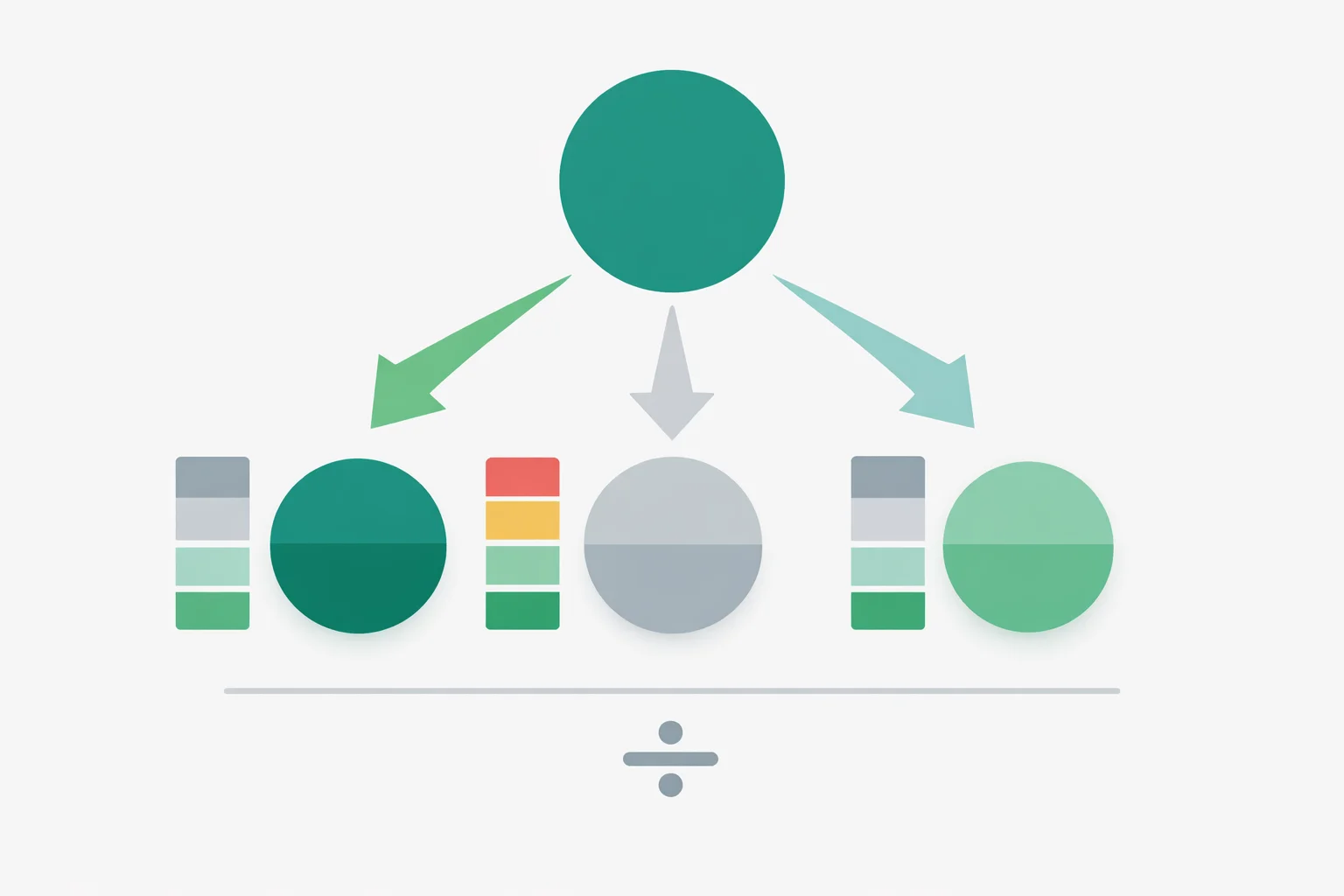
On this page
An LDL cholesterol calculator exists because most labs never actually measure your LDL — they estimate it from three numbers they did measure: total cholesterol, HDL, and triglycerides. That surprises people. The "LDL 128 mg/dL" on your lab report usually came out of a formula, not a test tube. This guide shows you the formulas behind that number, where they disagree, and why the same blood sample can produce an LDL that swings by 10–20 mg/dL depending on which equation the lab used.
Why your LDL was calculated, not measured
Directly measuring LDL particles (a "direct LDL" or beta-quantification assay) is slower and costs more, so routine lipid panels skip it. Instead, the lab runs total cholesterol and HDL directly, measures triglycerides, and then back-calculates LDL. Cholesterol in your blood travels in four main packages: LDL, HDL, VLDL, and a small amount in chylomicrons. If you know the total and can subtract off HDL and the cholesterol riding in triglyceride-rich VLDL, what's left is LDL. Every LDL formula is just a different way of estimating that VLDL slice.
The Friedewald formula, with a worked example
The Friedewald formula, published in 1972, is the classic and still the most common: LDL = Total Cholesterol − HDL − (Triglycerides ÷ 5) in mg/dL. The "triglycerides ÷ 5" is the clever shortcut — it assumes VLDL cholesterol is always one-fifth of your triglyceride level. In mmol/L the divisor changes to 2.2 instead of 5.
Work an example. Say your panel reads total cholesterol 200, HDL 50, triglycerides 150 (all mg/dL). VLDL cholesterol is estimated as 150 ÷ 5 = 30. So LDL = 200 − 50 − 30 = 120 mg/dL, which lands in the "near optimal" band. Change nothing but raise triglycerides to 300 and the estimate becomes 200 − 50 − 60 = 90 mg/dL. Notice that higher triglycerides pull the calculated LDL down — that's the formula's built-in weakness, and it's exactly where the newer equations earn their keep.
Friedewald vs Martin-Hopkins vs Sampson
Three equations dominate modern lipid testing. They all start from the same TC − HDL backbone; they differ in how they estimate the VLDL slice. The calculator above runs Friedewald and Sampson side by side so you can see the spread on your own numbers.
| Method | VLDL estimate | Valid TG range | Best for |
|---|---|---|---|
| Friedewald (1972) | Fixed: TG ÷ 5 | < 400 mg/dL | Routine panels, normal triglycerides |
| Martin-Hopkins (2013) | Adjustable: 1 of 180 factors | < 400 mg/dL (often used to 800) | Low LDL (< 70) and higher triglycerides |
| Sampson/NIH (2020) | Regression on TG and non-HDL | Up to 800 mg/dL | High triglycerides, hypertriglyceridemia |
The Martin-Hopkins method replaced Friedewald's rigid "÷ 5" with one of 180 adjustment factors, chosen from a grid based on your triglyceride and non-HDL levels — the divisor ranges from about 3.1 to 11.9 instead of being stuck at 5. Major labs like Quest and many hospital systems now report Martin-Hopkins LDL by default because it agrees better with direct measurement, especially when LDL is below 70 mg/dL. The Sampson equation (developed at the National Institutes of Health) uses a regression model and was built specifically for people with triglycerides between 400 and 800 mg/dL, where both of the older methods stumble. For a fuller picture of the whole panel, the cholesterol calculator interprets all your lipid values together.
When triglycerides break the math
Friedewald has a hard ceiling: once triglycerides pass 400 mg/dL, the "TG ÷ 5" assumption falls apart because VLDL composition shifts, and the formula increasingly underestimates LDL — sometimes by 20 mg/dL or more. That matters clinically: a falsely low LDL can hide real cardiovascular risk and delay treatment. This is why the calculator above automatically switches to the Sampson/NIH result when you enter triglycerides over 400. Above 800 mg/dL, no estimating equation is trustworthy and a direct LDL test is the only honest answer. High triglycerides also feed into the triglyceride calculator, which flags the 150 and 500 mg/dL thresholds that change management. An LDL of 190 mg/dL or above is the one value that overrides a risk score entirely and calls for a high-intensity statin on its own — every other LDL result is read against your 10-year risk band, which our guide to reading an ASCVD risk score breaks down at the 5%, 7.5% and 20% cutoffs.
Non-HDL cholesterol: the number Friedewald can't fudge
Here's a number every calculated-LDL skeptic should know: non-HDL cholesterol = total cholesterol − HDL. No triglyceride estimate, no division, no assumptions — just subtraction. Because it captures the cholesterol in every harmful particle (LDL plus VLDL and remnants), non-HDL stays reliable even when triglycerides are sky-high and LDL formulas fail. Its target is simply your LDL goal plus 30: if you're aiming for LDL under 100, aim for non-HDL under 130. Many lipid specialists now treat non-HDL as the primary target precisely because it sidesteps the calculation problem. The calculator above reports it alongside your LDL so you always have a formula-proof backup number. If that backup number is the one you actually care about, the non-HDL cholesterol calculator takes it further — matching your result against ACC/AHA and ESC/EAS targets for your risk tier and flagging the cases where a passing LDL sits under a failing non-HDL.
Four mistakes that throw off your LDL
1. Not fasting. Eating before the draw can spike triglycerides by 20–100 mg/dL, and since calculated LDL subtracts TG ÷ 5, that inflates the VLDL estimate and drops your LDL artificially. Fast 9–12 hours (water and medications are fine) for a Friedewald-based panel.
2. Mixing up the units. An LDL of "3.1" is mmol/L (common in the UK, Canada, Australia); "120" is mg/dL (US). To convert, multiply mmol/L by 38.67. Plugging an mmol/L value into a mg/dL formula produces nonsense — the calculator above keeps both straight with a unit toggle.
3. Comparing across formulas. If last year's panel used Friedewald and this year's lab switched to Martin-Hopkins, a 10 mg/dL "rise" might just be the method change, not your arteries. Check which equation your lab uses before reading a trend.
4. Treating one reading as gospel. Day-to-day biological variation in lipids runs roughly 5–10%, so a single LDL within 10 points of your target isn't a verdict. Two readings a few weeks apart tell a truer story than one.
What your LDL number should be
LDL targets aren't one-size-fits-all — they fall with your overall risk. An LDL under 100 mg/dL is optimal for most healthy adults, but someone who has had a heart attack is typically pushed below 70 mg/dL, and the latest guidelines float an even tighter goal under 55 mg/dL for the highest-risk patients. The categories below are the population reference points; your personal target depends on your full risk picture, which you can estimate with the ASCVD risk calculator. Use your calculated LDL as a screening signal — then let a clinician set the line that applies to you.
The practical takeaway: read your LDL with its method in mind, lean on non-HDL when triglycerides are high, and remember the number on the page is an estimate sharp enough to guide decisions but not precise enough to obsess over a few points.
References
- Friedewald WT, Levy RI, Fredrickson DS. Estimation of the concentration of low-density lipoprotein cholesterol in plasma. Clin Chem. 1972. PubMed
- Martin SS, et al. Comparison of a novel method vs the Friedewald equation for estimating LDL-C. JAMA. 2013. PubMed
- Sampson M, et al. A new equation for calculation of LDL-C in patients with hypertriglyceridemia. JAMA Cardiol. 2020. PubMed
- Grundy SM, et al. 2018 AHA/ACC Guideline on the Management of Blood Cholesterol. Circulation

Written by Jurica Šinko
Founder & CEO
Entrepreneur and health information advocate, passionate about making health calculations accessible to everyone through intuitive digital tools.
View full profileFrequently Asked Questions
Why is my LDL cholesterol calculated instead of measured?
Most lipid panels measure total cholesterol, HDL, and triglycerides directly, then estimate LDL with a formula because a direct LDL test is slower and costs more. Roughly 90% of routine LDL values on lab reports are calculated, not measured. A direct LDL assay is usually reserved for cases where triglycerides are very high.
How do I calculate LDL from total cholesterol and HDL?
Use the Friedewald formula: LDL = Total Cholesterol − HDL − (Triglycerides ÷ 5) in mg/dL. For example, with total cholesterol 200, HDL 50, and triglycerides 150, LDL = 200 − 50 − 30 = 120 mg/dL. In mmol/L, divide triglycerides by 2.2 instead of 5.
Is the Friedewald formula accurate if my triglycerides are high?
No. Once triglycerides pass 400 mg/dL, the Friedewald formula underestimates LDL, sometimes by 20 mg/dL or more, because its fixed triglyceride-to-VLDL ratio breaks down. For triglycerides between 400 and 800 mg/dL, the Sampson/NIH equation is more accurate. Above 800 mg/dL, only a direct LDL test is reliable.
What is the difference between Friedewald and Martin-Hopkins LDL?
Friedewald always divides triglycerides by 5 to estimate VLDL cholesterol. Martin-Hopkins instead picks one of 180 adjustment factors (ranging from about 3.1 to 11.9) based on your triglyceride and non-HDL levels. Martin-Hopkins agrees better with direct measurement, especially when LDL is below 70 mg/dL, which is why many labs now report it.
Is an LDL of 130 mg/dL bad?
An LDL of 130 mg/dL is borderline high — the optimal range is below 100 mg/dL, and 100–129 is near optimal. Whether 130 needs treatment depends on your overall cardiovascular risk; someone who has had a heart attack is typically targeted below 70 mg/dL, while a low-risk adult may not need medication at 130.
What is non-HDL cholesterol and why does it matter?
Non-HDL cholesterol is simply total cholesterol minus HDL, with no formula or estimate involved, so it stays reliable even when triglycerides are high and LDL formulas fail. Its target is your LDL goal plus 30 — if you want LDL under 100, aim for non-HDL under 130. Many specialists now use it as a primary treatment target.
Do I need to fast before an LDL cholesterol test?
For a Friedewald-based LDL, fasting 9–12 hours matters because eating can raise triglycerides by 20–100 mg/dL and artificially lower your calculated LDL. Water and most medications are fine during the fast. Non-fasting panels are increasingly accepted, but a fasting sample gives the cleanest triglyceride and LDL numbers.
How do I convert LDL from mmol/L to mg/dL?
Multiply the mmol/L value by 38.67 to get mg/dL. For example, an LDL of 3.1 mmol/L equals about 120 mg/dL. To go the other way, divide mg/dL by 38.67. Triglycerides use a different factor (multiply mmol/L by 88.5), which is why the calculator handles each value separately.
Related Calculators
A1C Calculator — Convert HbA1c to eAG with Targets
Use our A1C calculator to convert HbA1c to estimated average glucose (eAG). See normal, prediabetes, and diabetes thresholds in mg/dL and mmol/L. Fast results.
Albumin Calculator — Serum Albumin Level Interpretation
Free albumin calculator to interpret serum albumin levels, grade hypoalbuminemia, and compute A/G ratio plus albumin-corrected calcium from your lab results.
Albumin-Corrected Anion Gap Calculator — Hidden Acidosis
Use our albumin-corrected anion gap calculator to raise the anion gap by 2.5 per 1 g/dL of low albumin and reveal a hidden high-gap metabolic acidosis.

ANC Calculator: Absolute Neutrophil Count & Neutropenia
Free ANC calculator to calculate absolute neutrophil count from WBC and differential. Get ANC in cells/uL and x10^9/L with instant neutropenia grading.
Anion Gap Calculator — Metabolic Acidosis Evaluation
Free anion gap calculator finds serum anion gap from sodium, chloride, and bicarbonate, with albumin correction and delta ratio for metabolic acidosis.
AST/ALT Ratio Calculator — Free De Ritis Ratio Tool
Use our free AST/ALT ratio calculator to compute the De Ritis index instantly. Visual ratio chart, enzyme-level assessment, and clinical patterns guide.