Use the Ozempic Dosage Calculator
Free Ozempic dosage calculator mapping the semaglutide titration schedule from 0.25 mg through 2.0 mg, with week-by-week escalation dates and unit conversions.
Dose this week
0.25 mg
Which medication?
Week 1 starts here. Every later step is dated from this injection.
The dose you and your prescriber plan to stay on.
Your dose in week 1
0.25 mg
once weekly · semaglutide
You reach 1 mg on Nov 11, 2026 — after 8 weeks and 8 titration injections.
Maintenance starts
Nov 11, 2026
Titration length
8 weeks
Dose steps
0.25 → 0.5 → 1 mg
Your Ozempic titration schedule, week by week
| Dose | Dates | Duration | Pen |
|---|---|---|---|
| 0.25 mg(now) | Sep 16, 2026 – Oct 13, 2026 | 4 weeksInitiation only — not glycemic-effective | Red-label pen (2 mg/1.5 mL) |
| 0.5 mg | Oct 14, 2026 – Nov 10, 2026 | 4 weeks | Red-label pen (2 mg/1.5 mL) |
| 1 mg | Nov 11, 2026 onward | Ongoing | Blue-label pen (4 mg/3 mL) |
mg to syringe units (compounded vials)
For semaglutide or tirzepatide drawn from a vial with a U-100 insulin syringe. Check the concentration printed on YOUR vial — compounded products range from 1 to 10 mg/mL.
U-100 syringe units
10 units
Volume to draw
0.1 mL
Schedule reference, not prescribing advice. This tool maps the manufacturer's labeled titration timelines — your prescriber may hold a dose longer for nausea, skip an escalation, or stop below the maximum. Never change your dose without talking to them, and never draw doses from a vial without confirming its exact concentration. Gaps of more than 2 weeks off semaglutide may require restarting titration.
Educational tool, not medical advice. Check this tool’s method and limitations before interpreting a result. Talk to a qualified healthcare professional before making decisions about medication, diet, exercise, or treatment. See our Terms of Use.
Your rating helps improve Ozempic Dosage Calculator. We store only an anonymized vote (no personal data).
How to Use Ozempic Dosage Calculator
Step 1: Choose your medication
Select Ozempic, Wegovy, or Mounjaro/Zepbound (tirzepatide) — each has a different labeled dose ladder and maximum.
Step 2: Enter your first injection date
Set the date of your very first dose in the "Date of your first injection" field. Every escalation date is counted from it.
Step 3: Pick your target maintenance dose
Choose the dose you and your prescriber plan to stay on — for example 1 mg for Ozempic or 2.4 mg for Wegovy.
Step 4: Read your schedule
The table dates every 4-week step, highlights the dose you should be on today, and shows the day you reach maintenance.
Step 5: Convert mg to units if using a vial
For compounded semaglutide, enter your dose and the vial concentration in mg/mL to get U-100 syringe units and mL to draw.
Key Features
- Week-by-week titration dates computed from your first injection
- Covers Ozempic, Wegovy and tirzepatide (Mounjaro/Zepbound) ladders
- Shows the dose you should be on today and your maintenance start date
- Pen strength listed for every dose step
- mg-to-units converter for compounded vials on a U-100 syringe
Understanding Results
How the Schedule Is Computed
The calculator builds your ladder from the FDA-labeled titration steps: each dose below your target runs a minimum of 4 weeks (28 days) from your first-injection date, so the start of step N is first injection + 28 × (N − 1) days, and your maintenance date is the day after the last titration step ends. The units converter uses volume = dose (mg) ÷ concentration (mg/mL), then units = volume × 100, because a U-100 insulin syringe marks 100 units per mL.
Labeled Dose Steps & Interpretation
Ozempic (type 2 diabetes): 0.25 mg × 4 weeks (initiation only, not glycemic-effective), then 0.5 mg; optional escalation to 1 mg and a 2 mg maximum, each after at least 4 weeks on the prior dose. Wegovy (weight management): 0.25 → 0.5 → 1 → 1.7 mg at 4 weeks each, reaching the 2.4 mg maintenance dose in week 17 (1.7 mg is an accepted maintenance fallback). Mounjaro/Zepbound (tirzepatide): 2.5 mg × 4 weeks, then 5 mg, climbing in 2.5 mg increments no faster than every 4 weeks to a 15 mg maximum. All doses are injected once weekly, on the same weekday, per the manufacturers' prescribing information.
Assumptions & Limitations
The dates model the fastest labeled path — the 4-week step is a minimum, and prescribers routinely hold a dose longer for nausea or stop below the maximum once targets are met, so treat every future date as the earliest possible, not a commitment. The tool does not adjust for renal or hepatic disease, pregnancy, insulin or sulfonylurea co-therapy, or gaps in treatment (after roughly 2 weeks off, re-titration at a lower dose may be needed). Compounded products vary in concentration between pharmacies; always confirm the mg/mL printed on your own vial. This is a schedule reference, not prescribing advice — dose changes belong to you and your prescriber.
Complete Guide: Ozempic Dosage Calculator

Table of contents
- A worked timeline: first injection to 1 mg in 8 weeks
- Why every step lasts 4 weeks (it's the half-life)
- Ozempic dosage vs. Wegovy vs. tirzepatide: three ladders compared
- When nausea rewrites the schedule
- Missed doses: the 5-day and 2-week rules
- Compounded semaglutide: converting mg to syringe units
- What to track at each plateau
Your Ozempic dosage for the entire first month is 0.25 mg — a dose the manufacturer openly states does nothing meaningful for your blood sugar. That surprises almost everyone holding their first red-label pen. Semaglutide isn't prescribed like most drugs, where day one is a working dose; it's climbed like a ladder, four weeks per rung, and the first rung exists purely to train your gut to tolerate the drug. This guide walks a real schedule from first injection to maintenance, explains the pharmacology behind the four-week rule, and compares the semaglutide ladders (Ozempic and Wegovy) against tirzepatide's (Mounjaro and Zepbound).
A Worked Timeline: First Injection to 1 mg in 8 Weeks
Take a concrete case: a patient with type 2 diabetes injects their first 0.25 mg dose on Monday, September 7. Their prescriber's plan is the most common Ozempic maintenance dose, 1 mg weekly. Here is what the labeled schedule produces, dated injection by injection:
| Weeks | Dates | Dose | What this step is for |
|---|---|---|---|
| 1–4 | Sep 7 – Oct 4 | 0.25 mg | Initiation only — trains GI tolerance, not glycemic-effective |
| 5–8 | Oct 5 – Nov 1 | 0.5 mg | First therapeutic dose; many patients stay here permanently |
| 9+ | Nov 2 onward | 1 mg | Maintenance — ongoing, same weekday every week |
Eight titration injections, then maintenance begins on November 2 — the calculator above produces exactly this table from your own start date. Two details trip people up. First, the escalation happens at the ninth injection, not after the eighth week ends on a random day: doses stay on the same weekday throughout. Second, 1 mg is not the ceiling. If glycemic control is still inadequate after at least 4 weeks at 1 mg, the label allows one more step to 2 mg — in the SUSTAIN FORTE trial, that final doubling bought an extra 0.3 percentage points of A1C reduction (−2.2% vs. −1.9% at 40 weeks).
Why Every Step Lasts 4 Weeks — It's the Half-Life
The four-week rule looks bureaucratic until you see the pharmacokinetics. Semaglutide's elimination half-life is roughly 7 days, and any drug dosed at intervals near its half-life accumulates until it reaches steady state at about 4 to 5 half-lives — which for semaglutide means 4 to 5 weeks. When you inject 0.5 mg in week 5, your blood level doesn't jump to the “0.5 mg level” that day; it climbs for the next month as each weekly dose stacks on the residue of the last. Escalating before steady state means climbing onto a rung whose true height you haven't felt yet.
That's also why skipping steps backfires so predictably. Nausea on semaglutide is dose-dependent: in Ozempic's registration trials, 15.8% of patients on 0.5 mg and 20.3% on 1 mg reported nausea, against 6.1% on placebo. Start at 1 mg cold and you take the full concentration ramp with a gut that has had zero weeks of adaptation — vomiting and dehydration are the typical result, and dehydration on top of a GLP-1 is one of the recognized paths to acute kidney injury. The slow ladder isn't caution theater; it front-loads adaptation during the weeks the drug level is still low.
Ozempic Dosage vs. Wegovy vs. Tirzepatide: Three Ladders Compared
Ozempic and Wegovy are the same molecule — semaglutide — with different indications and different ceilings. Wegovy's weight-management ladder adds a 1.7 mg rung and tops out at 2.4 mg, so the full climb takes 16 weeks instead of Ozempic's 8 to 12. Tirzepatide (sold as Mounjaro for diabetes and Zepbound for weight loss) is a different molecule entirely — a dual GIP/GLP-1 agonist — and runs a longer ladder in 2.5 mg increments:
| Ladder | Ozempic | Wegovy | Mounjaro / Zepbound |
|---|---|---|---|
| Molecule | Semaglutide | Semaglutide | Tirzepatide |
| Starting dose | 0.25 mg | 0.25 mg | 2.5 mg |
| Steps | 0.25 → 0.5 → 1 → 2 | 0.25 → 0.5 → 1 → 1.7 → 2.4 | 2.5 → 5 → 7.5 → 10 → 12.5 → 15 |
| Maximum dose | 2 mg weekly | 2.4 mg weekly | 15 mg weekly |
| Weeks to maximum | 12 | 16 | 20 |
Don't read the milligram numbers across columns — 5 mg of tirzepatide is not “ten times stronger” than 0.5 mg of semaglutide; they're different molecules with different potencies. In the SURPASS-2 head-to-head, tirzepatide 5 mg lowered A1C by 2.01% versus 1.86% for semaglutide 1 mg. What does carry across all three ladders is the rule: a minimum of 4 weeks per rung, and escalation only when the current dose is tolerated and more effect is actually needed. Weight-loss results follow the same gradual logic — in the STEP 1 trial, Wegovy 2.4 mg produced 14.9% mean body-weight loss over 68 weeks, and pairing the drug with an honest energy target from a calorie deficit calculator is what separates the trial-level results from the disappointed reviews.
When Nausea Rewrites the Schedule
Here's what the printed schedule doesn't tell you: the 4-week step is a floor, not a promise. Prescribers routinely hold patients at 0.5 mg for 8 or 12 weeks when nausea lingers, and both the Ozempic and Wegovy labels explicitly permit delaying escalation — Wegovy's even allows dropping back from 2.4 mg to 1.7 mg for maintenance if the top dose isn't tolerated. Roughly 4.9% of Wegovy trial patients discontinued for GI adverse events; most of the rest got through by climbing slower. If week 5 arrives and you're still queasy on 0.25 mg, the right move is a conversation with your prescriber, not a forced step up. The calculator's dates model the fastest labeled path; your real schedule can only be slower, never faster.
There's a strategic reason to stop climbing, too. The label ties each escalation to need: if your A1C is at goal on 0.5 mg, there is no bonus for reaching 1 mg — just a higher nausea rate and, at current U.S. list prices, the same monthly cost for more drug than you require. In the SUSTAIN trials, 0.5 mg alone delivered A1C reductions around 1.4%. Plenty of people never see the blue-label pen, and that's the schedule working as designed.
What Happens If You Miss a Dose?
The rule on the Ozempic label is a 5-day window: if you remember within 5 days of the missed injection, take it as soon as you can and keep your original weekday. If more than 5 days have passed, skip it entirely and wait for the next scheduled dose — doubling up compresses two weekly doses into one accumulation curve and reliably reproduces the nausea you spent a month escaping. With a 7-day half-life, one skipped week only drops your level by about half; the schedule absorbs it.
Longer gaps are different. After roughly 2 weeks off, blood levels have fallen far enough that GI tolerance starts to reset, and after a month away most of the drug is simply gone (four half-lives leaves ~6% of steady state). The Wegovy label addresses this directly: after an extended interruption, reinitiate at a lower dose and re-climb. Practically, that means a vacation that cost you three injections may also cost you a rung or two on the ladder — plug your restart date into the calculator as a fresh “first injection” and let your prescriber pick the re-entry dose.
Compounded Semaglutide: Converting mg to Syringe Units
Brand pens dial the dose for you, but millions of people now draw compounded semaglutide from a vial with a U-100 insulin syringe — and every dosing error in that world is a unit-conversion error. The math has two steps: divide your dose in mg by the vial's concentration in mg/mL to get a volume, then multiply by 100, because a U-100 syringe marks 100 units per milliliter. At the common 2.5 mg/mL concentration, 0.25 mg = 0.1 mL = 10 units; 0.5 mg = 20 units; 1 mg = 40 units. But compounded concentrations genuinely range from 1 to 10 mg/mL between pharmacies — the same “20 units” is 0.5 mg from one vial and 2 mg from another, a 4-fold overdose. The FDA has logged hospitalizations from exactly this mix-up. Verify the concentration printed on your vial every refill, and cross-check the draw with our dosage calculator for general mg-to-mL work, or the units converter built into the tool above.
What to Track at Each Plateau
Each 4-week plateau is a measurement window, and what's worth measuring depends on why you're on the drug. For type 2 diabetes, the decision to climb from 0.5 mg to 1 mg should rest on numbers: fasting glucose trends, and an A1C drawn after you've been at steady state on the current dose — if you're also on insulin or a sulfonylurea, escalation often forces a downward adjustment of those doses to avoid hypoglycemia, something to plan with the help of an insulin dose calculator and your prescriber. For weight management, weigh weekly and judge each rung by trajectory: the STEP trials showed continued loss through month 15 or so before the curve flattens, so a plateau at week 6 is noise, not failure. And if you're taking a GLP-1 primarily to head off progression from prediabetes, pairing the schedule with a diabetes risk calculator score gives you a before-and-after number that means more than the scale. Whatever the goal, the schedule's job is the same: get you to the lowest dose that works, on a date you can predict.
References
- U.S. Food and Drug Administration. Ozempic (semaglutide) Prescribing Information — dosage and administration, missed-dose handling, adverse reaction rates.
- Wilding JPH, et al. Once-Weekly Semaglutide in Adults with Overweight or Obesity (STEP 1). N Engl J Med. 2021;384:989–1002.
- Frías JP, et al. Tirzepatide versus Semaglutide Once Weekly in Patients with Type 2 Diabetes (SURPASS-2). N Engl J Med. 2021;385:503–515.

Written by Jurica Šinko
Founder & CEO
Entrepreneur and health information advocate, passionate about making health calculations accessible to everyone through intuitive digital tools.
View full profileFrequently Asked Questions
How long do you stay on 0.25 mg of Ozempic?
Four weeks. The 0.25 mg starting dose is for treatment initiation only — the label states it is not effective for glycemic control. After 4 weekly injections you step up to 0.5 mg, which is the first therapeutic dose.
What happens if you start Ozempic at 1 mg instead of titrating?
You take the full dose with zero weeks of gut adaptation, and side effects scale accordingly — nausea affects 20.3% of patients even after proper titration to 1 mg, versus 6.1% on placebo. Severe vomiting and the dehydration it causes are a recognized route to acute kidney injury on GLP-1 drugs, which is why the label makes 0.25 mg mandatory for the first 4 weeks.
When do you increase Ozempic from 0.5 to 1 mg?
After at least 4 weeks at 0.5 mg, and only if you need more glycemic control. If your fasting glucose and A1C are at goal on 0.5 mg, there is no benefit to climbing — 0.5 mg is an approved long-term maintenance dose, and many patients never go higher.
Is Wegovy the same drug as Ozempic?
Yes — both are once-weekly semaglutide. Ozempic is approved for type 2 diabetes with a 2 mg maximum; Wegovy is approved for weight management with a longer ladder (0.25, 0.5, 1, 1.7, then 2.4 mg) reaching its 2.4 mg maintenance dose at week 17. The titration steps below 1.7 mg are identical.
What do I do if I miss an Ozempic dose?
If you are within 5 days of the missed injection, take it as soon as you remember and keep your usual weekday. If more than 5 days have passed, skip it and take the next dose on schedule — never double up. After an extended gap of several weeks, ask your prescriber about restarting at a lower dose, since GI tolerance fades as the drug washes out.
How many units is 0.25 mg of semaglutide on a U-100 syringe?
At the common compounded concentration of 2.5 mg/mL, 0.25 mg is 0.1 mL, which reads 10 units on a U-100 insulin syringe. The formula is dose in mg divided by concentration in mg/mL, times 100. Always check your own vial — compounded concentrations range from 1 to 10 mg/mL, so the same unit count can deliver very different doses.
How is the Mounjaro titration schedule different from Ozempic’s?
Mounjaro (tirzepatide) starts at 2.5 mg weekly for 4 weeks, then 5 mg, and can climb in 2.5 mg increments every 4 or more weeks to a 15 mg maximum — a 20-week ladder versus Ozempic’s 12. The milligrams are not comparable across drugs: in the SURPASS-2 trial, tirzepatide 5 mg lowered A1C slightly more than semaglutide 1 mg.
Why does each Ozempic dose step last 4 weeks?
Semaglutide’s half-life is about 7 days, so weekly injections accumulate for 4 to 5 weeks before blood levels plateau at steady state. The 4-week step lets you feel the full effect of a dose before deciding to escalate — increase sooner and you are stacking a new dose on a level that is still rising.
Related Calculators

Adjusted Body Weight Calculator — Dosing Weight (ABW)
Compute ABW for dosing with our adjusted body weight calculator, alongside IBW reference. Essential for accurate medication dosing, especially in obesity.

Alcohol Calculator: Drinks, Calories, Cost and BAC
Use our alcohol calculator to track standard drinks, alcohol calories, cost, and estimated BAC. Plan sessions, see time to sober, and make informed choices.

Alcohol Units Calculator UK — Weekly Tracking & Limits
Free alcohol units calculator for UK weekly tracking. Convert drinks to units, check against the 14-unit guideline, and see calories, standard drinks, and more.

BAC Calculator — Estimate Blood Alcohol Level by Drink
Use our BAC calculator to estimate blood alcohol levels from drinks, ABV, weight, sex, and hours. See limit markers, impairment ranges, and time to sober.

Caffeine Calculator: Daily Intake Tracker & Safe Limits
Use our caffeine calculator to total daily milligrams from coffee, tea, energy drinks, and custom doses, then check the running total against the 400 mg limit.
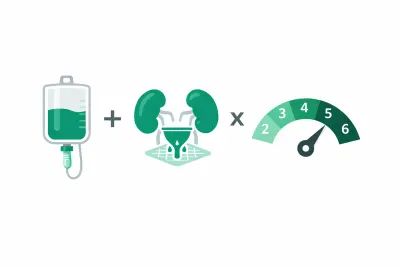
Carboplatin AUC Calculator — Calvert Formula Dosing
Free carboplatin AUC calculator using the Calvert formula to find chemotherapy dose in mg from target AUC, GFR, and Cockcroft-Gault creatinine clearance.