Use the Dexamethasone to Prednisone Conversion Calculator
Free dexamethasone to prednisone conversion calculator. Convert any corticosteroid dose instantly using standard steroid equivalency ratios and charts.
Dexamethasone → Prednisone
26.67 mg/day
Pred equiv.
26.67 mg
Steroid you're converting from
Steroid you're converting to
mg per single dose
Dosing frequency
Common Dexamethasone doses:
Dexamethasone 4 mg/day =
26.67 mg/day Prednisone
Prednisone equivalent: 26.67 mg/day
Tablet suggestion
27 × 1 mg
= 27 mg
Daily dose (source)
4 mg
Dexamethasone
Pred. equivalent
26.67 mg
Prednisone/day
Potency ratio
1:6.7
Dexamethasone:Prednisone
Half-life (Prednisone)
12-36 h
Biological
Relative Anti-Inflammatory Potency
Full Corticosteroid Equivalence Table
Based on Dexamethasone 4 mg/day input
| Corticosteroid | Equiv. Dose |
|---|---|
| DexamethasoneFROM36-54 h · negligible MC | 4 mg/day |
| PrednisoneTO12-36 h · moderate MC | 26.67 mg/day |
| Prednisolone12-36 h · moderate MC | 26.67 mg/day |
| Methylprednisolone18-36 h · low MC | 21.33 mg/day |
| Hydrocortisone8-12 h · high MC | 106.67 mg/day |
| Cortisone8-12 h · high MC | 133.33 mg/day |
| Betamethasone36-54 h · negligible MC | 3.2 mg/day |
| Triamcinolone12-36 h · low MC | 21.33 mg/day |
Quick Reference: Dexamethasone ↔ Prednisone
| Dexamethasone | Prednisone |
|---|---|
| 0.75 mg | 5 mg |
| 1.5 mg | 10 mg |
| 3 mg | 20 mg |
| 4 mg | 26.7 mg |
| 6 mg | 40 mg |
| 8 mg | 53.3 mg |
| 12 mg | 80 mg |
| 40 mg | 266.7 mg |
Clinical disclaimer: These equivalencies reflect anti-inflammatory (glucocorticoid) potency for systemic oral dosing. They do not account for differences in mineralocorticoid activity, duration of action, formulation, indication-specific protocols, or patient-specific factors. Always verify doses against current clinical guidelines and pharmacy references before prescribing.
Your rating helps improve Dexamethasone to Prednisone Conversion Calculator. We store only an anonymized vote (no personal data).
How to Use Dexamethasone to Prednisone Conversion Calculator
Step 1: Choose the conversion direction
Select your source steroid (the drug you are converting from) and target steroid (the drug you are converting to) using the dropdown menus or the quick-toggle buttons for Dex to Pred or Pred to Dex.
Step 2: Enter the dose
Type the dose per administration in milligrams into the Dose field. You can also click a common dose preset button to fill it automatically.
Step 3: Set the dosing frequency
Select how many times per day the medication is taken (QD, BID, TID, or QID) from the Times per day dropdown.
Step 4: Read the equivalent dose
The calculator instantly shows the equivalent target steroid dose in mg/day, prednisone-equivalent dose, potency ratio, tablet suggestion, and a full equivalence table for all corticosteroids.
Step 5: Copy or reset
Click Copy Summary to save the conversion result to your clipboard for documentation, or click Reset to start a new calculation.
Key Features
- Bidirectional dexamethasone-prednisone conversion with instant results
- Full 8-steroid equivalence table with half-life and mineralocorticoid data
- Tablet strength matching for real-world prescribing
- Common dose presets (COVID-19, asthma, antiemetic protocols)
- Dosing frequency adjustment (QD, BID, TID, QID)
- Copy-to-clipboard summary for clinical documentation
Understanding Results
Formula
The conversion uses standard corticosteroid equivalence ratios anchored to prednisone 5 mg:
Prednisone dose = Dexamethasone dose × (5 ÷ 0.75) = Dexamethasone dose × 6.667
Dexamethasone dose = Prednisone dose × (0.75 ÷ 5) = Prednisone dose × 0.15
For any two steroids, the general formula is: Target dose = Source dose × (Target equivalent dose ÷ Source equivalent dose). All equivalent doses reference prednisone 5 mg as the baseline.
Reference Ranges & Interpretation
Corticosteroid doses are classified by prednisone-equivalent intensity:
- Low dose: ≤7.5 mg prednisone/day — chronic maintenance, minimal side effects
- Moderate dose: 7.5–30 mg/day — active disease management, monitor glucose and blood pressure
- High dose: 30–100 mg/day — acute flares, significant side-effect risk
- Very high dose: >100 mg/day — pulse therapy, requires close monitoring
Assumptions & Limitations
This calculator assumes systemic oral or IV dosing. Key limitations include:
- Equivalence reflects anti-inflammatory potency only, not mineralocorticoid, bone, or metabolic effects
- Does not account for topical, inhaled, or intra-articular routes which have different potency rankings
- Prednisone is a prodrug requiring hepatic activation to prednisolone — in severe liver disease, prednisolone or dexamethasone may be preferred
- Individual patient response, formulation bioavailability, and indication-specific protocols may require dose adjustments beyond simple equivalence
Dexamethasone to Prednisone Conversion: What Clinicians Actually Need to Know
Dexamethasone to prednisone conversion is the single most common corticosteroid dose switch in clinical practice — and getting the ratio wrong can mean the difference between therapeutic relief and a flare. The standard equivalence factor is straightforward: 0.75 mg dexamethasone equals 5 mg prednisone in anti-inflammatory potency, giving dexamethasone roughly 6.7 times the glucocorticoid punch milligram-for-milligram. But the number alone doesn't tell the whole story.
This guide walks through the conversion math with real-world examples, explains why the two drugs aren't interchangeable in every scenario, and flags the clinical nuances — half-life, mineralocorticoid activity, formulation — that equivalence tables leave out.
The 0.75:5 Conversion Factor
Every corticosteroid equivalence table anchors to the same baseline: how many milligrams of a given steroid produce the same anti-inflammatory effect as 5 mg of prednisone? For dexamethasone the answer is 0.75 mg. That yields a potency multiplier of 6.67x (5 ÷ 0.75).
The conversion formula is simple algebra:
Prednisone dose (mg) = Dexamethasone dose (mg) × 6.667
Going the other direction is just the reciprocal:
These factors come from published potency ratios standardized in pharmacology references since the 1960s and remain the accepted values in current guidelines from the American College of Rheumatology and major formularies.
Worked Examples: Dex 4 mg, 6 mg, 8 mg
Three doses cover the vast majority of clinical scenarios. Here's the math, step by step.
| Scenario | Dex dose | Calculation | Prednisone equiv. |
|---|---|---|---|
| COVID-19 (RECOVERY trial) | 4 mg | 4 × 6.667 | 26.7 mg |
| Acute asthma / COPD exacerbation | 6 mg | 6 × 6.667 | 40 mg |
| Antiemetic / cerebral edema | 8 mg | 8 × 6.667 | 53.3 mg |
The RECOVERY trial famously used dexamethasone 6 mg daily for COVID-19. That's 40 mg prednisone-equivalent — a high dose by rheumatology standards but standard for acute respiratory failure. When providers needed to switch patients from IV dexamethasone to oral prednisone at discharge, this conversion became one of the most-Googled clinical questions of 2020-2021.
Dexamethasone vs. Prednisone: Beyond Potency
Potency equivalence tables are useful shortcuts, but they flatten three important differences between these two drugs.
| Property | Dexamethasone | Prednisone |
|---|---|---|
| GC potency (vs. pred 1x) | 6.67x | 1x (reference) |
| Mineralocorticoid activity | Negligible | Moderate |
| Biological half-life | 36-54 hours | 12-36 hours |
| Typical dosing frequency | Once daily or every other day | Once or twice daily |
| HPA axis suppression risk | Higher (long-acting) | Lower (intermediate-acting) |
| Fluid retention | Minimal | Moderate |
That mineralocorticoid gap is significant. Prednisone causes more sodium retention and potassium wasting than dexamethasone at equivalent anti-inflammatory doses. For patients with heart failure or uncontrolled hypertension, dexamethasone's negligible mineralocorticoid effect can be an advantage — but its long half-life introduces different risks.
Why Half-Life Matters More Than You Think
Dexamethasone's biological half-life of 36-54 hours means a single morning dose suppresses the HPA axis for nearly two full days. Prednisone, at 12-36 hours, clears faster and allows some adrenal recovery between doses. This is why most rheumatologists prefer prednisone for chronic use: it's easier to taper, and alternate-day dosing can partially spare adrenal function.
In acute settings — chemotherapy-induced nausea, cerebral edema, anaphylaxis rescue — the long half-life is actually desirable. One dose of dexamethasone covers a longer period without redosing. But if you're converting a patient from acute IV dexamethasone to chronic oral maintenance, switching to prednisone (or prednisolone) gives you much finer taper control. Our steroid conversion calculator handles multi-drug equivalencies for exactly these scenarios.
Four Mistakes That Change the Outcome
1. Forgetting the frequency. A patient on dexamethasone 4 mg twice daily is taking 8 mg/day, not 4 mg/day. That's 53.3 mg prednisone-equivalent, not 26.7 mg. Always convert the total daily dose.
2. Treating conversion as one-to-one for all effects. Anti-inflammatory potency ratios don't predict mineralocorticoid effects, bone loss rates, or glucose impact proportionally. Dexamethasone 4 mg and prednisone 26.7 mg suppress inflammation equally, but they don't cause equal sodium retention.
3. Using the conversion for topical or inhaled routes. The 0.75:5 ratio applies to systemic oral and IV dosing. Topical potency rankings are different — betamethasone cream, for instance, isn't “8.3 times stronger” than prednisolone cream in the way the systemic table implies.
4. Converting without adjusting the schedule. Switching from once-daily dexamethasone to once-daily prednisone may leave therapeutic gaps at the end of the dosing interval because prednisone clears faster. For some indications, splitting the prednisone dose into BID (twice daily) better covers the 24-hour period. A dosage calculator can help verify the per-dose math after splitting.
When to Convert (and When Not To)
The conversion is appropriate when:
- Switching formulations due to drug availability, cost, or formulary requirements
- Transitioning from IV to oral after acute illness (e.g., post-COVID discharge)
- Initiating a taper — converting to intermediate-acting prednisone for finer dose steps
- Comparing regimen intensity across studies or guidelines that use different steroids
It's not appropriate when:
- The indication specifically requires dexamethasone (e.g., fetal lung maturation uses dexamethasone, not prednisone)
- You need to convert for topical, inhaled, or intra-articular routes
- The patient has severe hepatic impairment — prednisone is a prodrug that requires hepatic conversion to prednisolone, while dexamethasone is active as-is
That last point catches people off guard. In advanced liver disease, prednisolone or dexamethasone may be preferred over prednisone because they don't require hepatic activation. Our mg/mL dose calculator can help with liquid formulations when tablet forms aren't feasible.
Other Steroid Equivalencies at a Glance
Dexamethasone and prednisone are the most commonly converted pair, but the full equivalence landscape includes eight systemic corticosteroids. Here's how they stack up relative to 5 mg prednisone:
| Corticosteroid | Equiv. to pred 5 mg | Relative potency |
|---|---|---|
| Hydrocortisone | 20 mg | 0.25x |
| Cortisone | 25 mg | 0.2x |
| Prednisone | 5 mg | 1x |
| Prednisolone | 5 mg | 1x |
| Methylprednisolone | 4 mg | 1.25x |
| Triamcinolone | 4 mg | 1.25x |
| Dexamethasone | 0.75 mg | 6.67x |
| Betamethasone | 0.6 mg | 8.33x |
Betamethasone is actually slightly more potent than dexamethasone (8.33x vs. 6.67x), but it's used less often for systemic therapy in most countries. For a full multi-steroid converter, see our steroid conversion calculator.
References
- Liu D, Ahmet A, Ward L, et al. “A practical guide to the monitoring and management of the complications of systemic corticosteroid therapy.” Allergy Asthma Clin Immunol. 2013;9(1):30. doi:10.1186/1710-1492-9-30
- RECOVERY Collaborative Group. “Dexamethasone in Hospitalized Patients with Covid-19.” N Engl J Med. 2021;384:693-704. doi:10.1056/NEJMoa2021436
- Schimmer BP, Funder JW. “ACTH, Adrenal Steroids, and Pharmacology of the Adrenal Cortex.” In: Brunton LL, ed. Goodman & Gilman's The Pharmacological Basis of Therapeutics. 13th ed. McGraw-Hill; 2018.

Written by Jurica Šinko
Founder & CEO
Entrepreneur and health information advocate, passionate about making health calculations accessible to everyone through intuitive digital tools.
View full profileFrequently Asked Questions
How much prednisone equals 4 mg of dexamethasone?
Dexamethasone 4 mg is equivalent to approximately 26.7 mg of prednisone. The conversion uses the standard ratio of 0.75 mg dexamethasone to 5 mg prednisone, giving dexamethasone about 6.67 times the anti-inflammatory potency of prednisone milligram for milligram.
What is the dexamethasone to prednisone conversion ratio?
The standard conversion ratio is 0.75 mg dexamethasone equals 5 mg prednisone for anti-inflammatory (glucocorticoid) potency. To convert, multiply the dexamethasone dose by 6.667 to get the prednisone equivalent. Going the other direction, multiply the prednisone dose by 0.15.
Is dexamethasone stronger than prednisone?
Yes, dexamethasone is approximately 6.67 times more potent than prednisone for anti-inflammatory effect. However, potency is not the whole picture. Dexamethasone has a longer half-life (36-54 hours vs 12-36 hours) and negligible mineralocorticoid activity, while prednisone causes more fluid retention but is easier to taper.
What is the difference between dexamethasone and prednisone?
Dexamethasone is a long-acting corticosteroid (36-54 hour half-life) with no mineralocorticoid activity, making it ideal for acute protocols. Prednisone is intermediate-acting (12-36 hours) with moderate mineralocorticoid effects, preferred for chronic use because its shorter duration allows easier tapering and less HPA axis suppression.
Why was dexamethasone 6 mg used for COVID-19?
The RECOVERY trial showed dexamethasone 6 mg daily (equivalent to 40 mg prednisone) reduced mortality in hospitalized COVID-19 patients requiring oxygen. Dexamethasone was chosen for its long half-life (one daily dose covers 24+ hours), lack of fluid-retaining effects, and established safety profile in critically ill patients.
Can I switch from dexamethasone to prednisone at home?
Steroid switching should only be done under medical supervision. While the dose conversion math is straightforward, the different half-lives and side-effect profiles require clinical judgment. Your provider may need to adjust the dosing schedule (e.g., splitting to twice daily) to maintain consistent drug levels.
Does this conversion apply to topical or inhaled steroids?
No. The 0.75 mg to 5 mg equivalence ratio applies only to systemic oral and intravenous dosing. Topical and inhaled corticosteroid potencies follow entirely different ranking systems based on local tissue penetration and formulation, not systemic anti-inflammatory potency.
How do I convert dexamethasone to methylprednisolone?
Multiply the dexamethasone dose by 5.33 to get the methylprednisolone equivalent. For example, dexamethasone 4 mg equals approximately 21.3 mg methylprednisolone. The conversion uses the chain: dexamethasone 0.75 mg equals prednisone 5 mg equals methylprednisolone 4 mg.
Related Calculators

Adjusted Body Weight Calculator — Dosing Weight (ABW)
Compute ABW for dosing with our adjusted body weight calculator, alongside IBW reference. Essential for accurate medication dosing, especially in obesity.

Alcohol Calculator: Drinks, Calories, Cost and BAC
Use our alcohol calculator to track standard drinks, alcohol calories, cost, and estimated BAC. Plan sessions, see time to sober, and make informed choices.

Alcohol Units Calculator UK — Weekly Tracking & Limits
Free alcohol units calculator for UK weekly tracking. Convert drinks to units, check against the 14-unit guideline, and see calories, standard drinks, and more.

BAC Calculator — Estimate Blood Alcohol Level by Drink
Use our BAC calculator to estimate blood alcohol levels from drinks, ABV, weight, sex, and hours. See limit markers, impairment ranges, and time to sober.

Caffeine Calculator — Daily Intake & Half-Life Guide
Use our caffeine calculator to total your intake and see how half-life affects sleep. Track coffee, tea, energy drinks, and custom doses to build better habits.
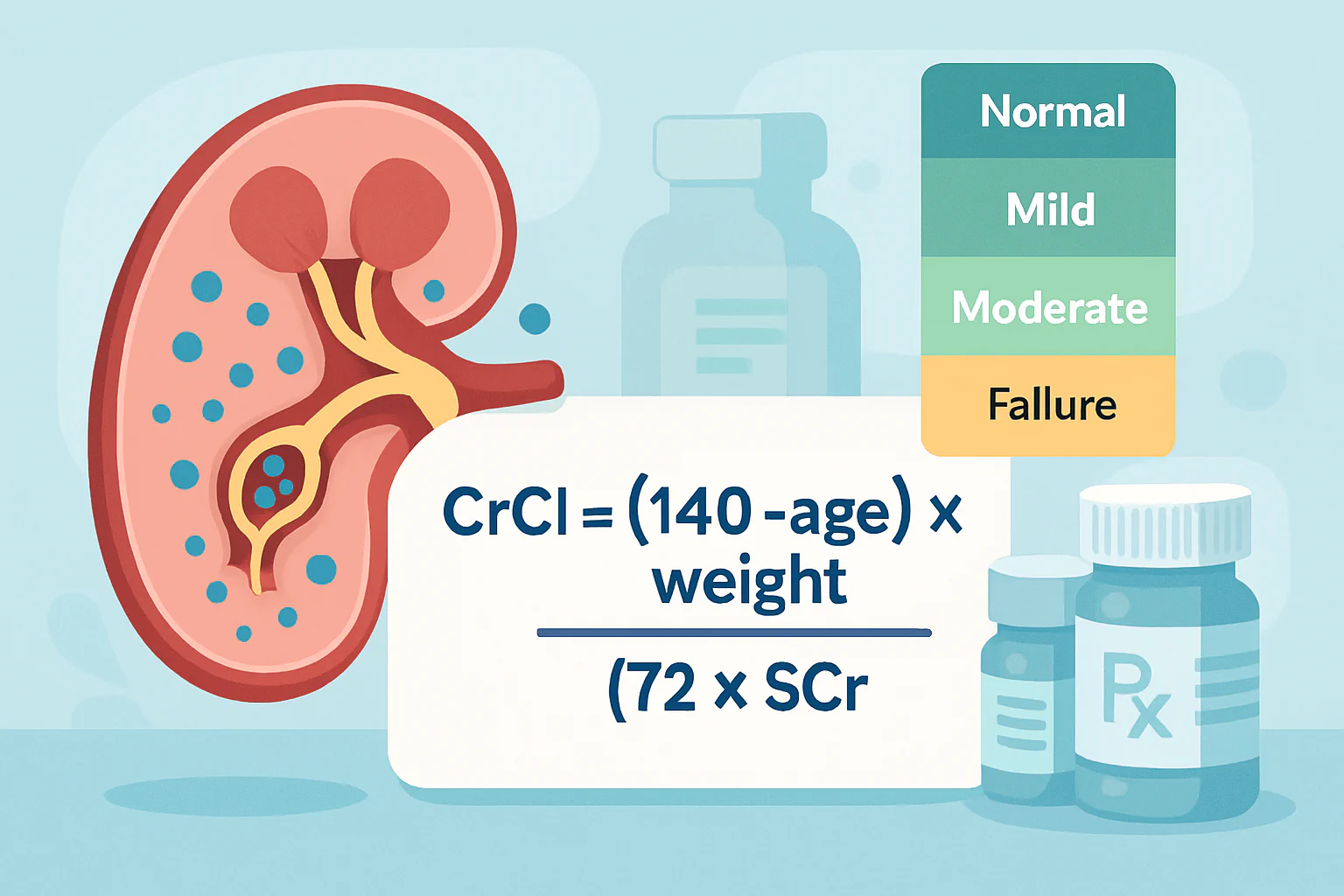
Cockcroft-Gault Calculator — Estimate Creatinine Clearance
Free Cockcroft-Gault calculator to estimate creatinine clearance (CrCl) using age, weight, serum creatinine, and sex for accurate renal dose adjustments.